
WEMBLEY · HA0 & HA9
Hidden Leak Detection in Wembley
Investigate concealed moisture with a clear question, an agreed scope and realistic limits. The position of a damp mark can guide the investigation, but it does not establish where a hidden leak begins.

Does a damp ceiling prove the leak is directly above it?
No. Water can travel through materials before becoming visible. The affected area, possible service routes and history of the mark need considering together.
Can I enquire from Wembley HA0 or HA9?
Yes. Call with your postcode, the visible symptoms and any known leak history. Explain whether the issue is active, intermittent or left over from earlier work.
Describe the concealed moisture problem
Begin with what is visible: a spreading ceiling mark, damp flooring, a wet wall or repeated staining in the same place. Tell us which rooms are involved and whether another room, bathroom or service route is nearby. Explain when the mark appeared and whether it changes after water use, rainfall or periods when the property is unoccupied.
Mention any repair that has already been carried out, including whether the area was able to dry afterwards. This information can help define the investigation question. It does not establish a diagnosis before inspection. The proposed detection scope, access and method suitability should be discussed before booking rather than assuming every concealed source can be located during one visit.
Distinguish active moisture from an old mark
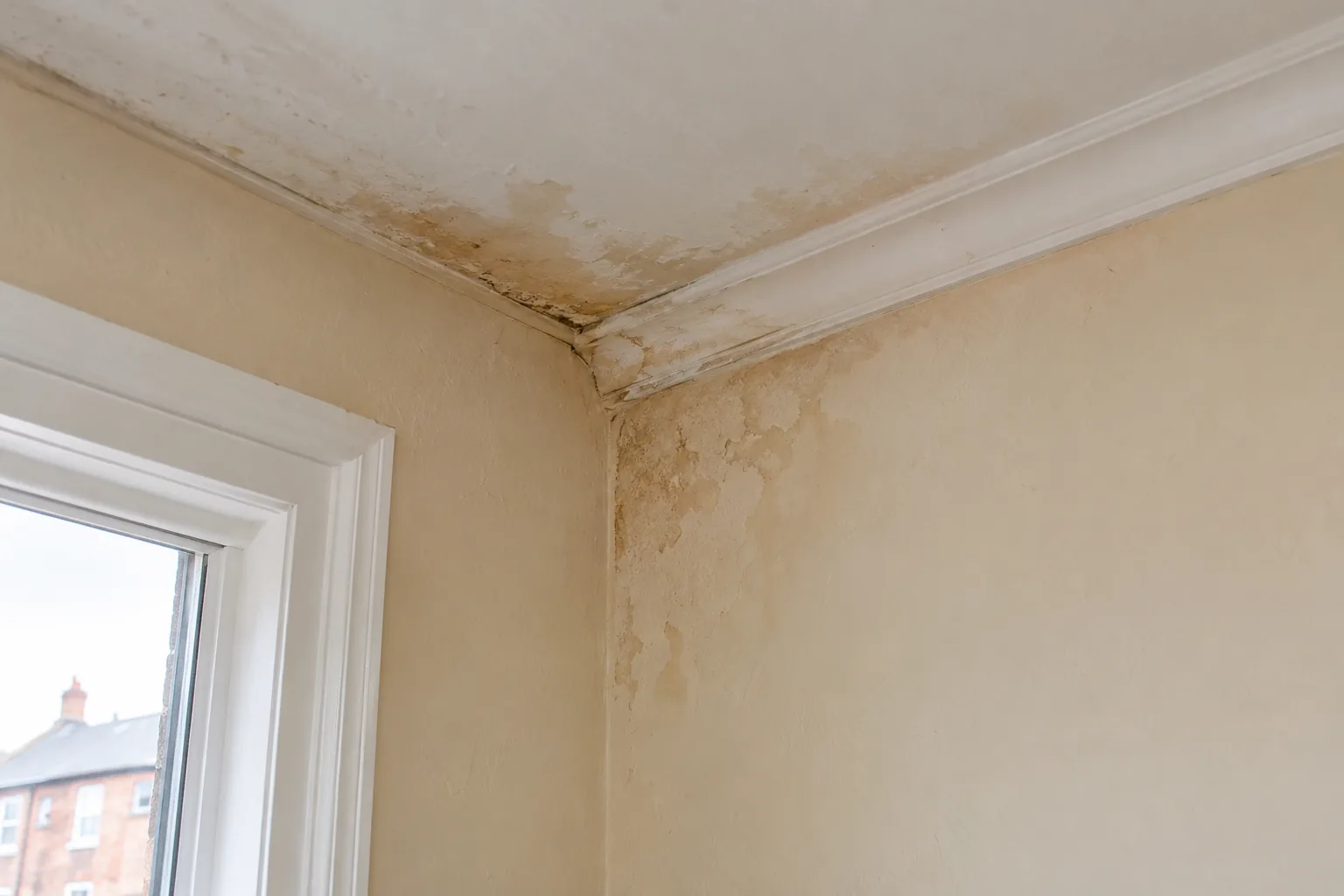
A stain can remain after a leak has stopped, while a newly wet area may extend beyond the visible discolouration. The assessment should consider the surface condition, history and any appropriate measurements together. A photograph of a brown ceiling patch cannot confirm whether water is still entering or whether the underlying material has dried.
Explain whether the mark has recently enlarged, become wet to the touch or returned after repainting. Do not conceal it with a new finish before the next step has been agreed. Where a previous leak is known, identifying what was repaired and when can be important. Residual moisture and an unresolved source may lead to different recommendations, and the distinction may require more than one observation.

Review potential routes rather than a single point
The visible patch is a starting point for investigation, not necessarily the point where water escaped. Pipework, fixtures and other concealed routes may need considering in relation to the layout. Water can follow joints, cavities or materials before reaching an exposed surface. The assessment should avoid treating proximity alone as proof that a particular pipe or fitting is responsible.
Available plans, access panels and information about recent alterations may be useful. Tell us about neighbouring rooms and known service positions without opening walls yourself. Access to adjoining areas may need arranging with an owner or occupier. The scope should say which areas can be reviewed and where conclusions remain limited because the relevant route is concealed.
Use moisture mapping appropriately
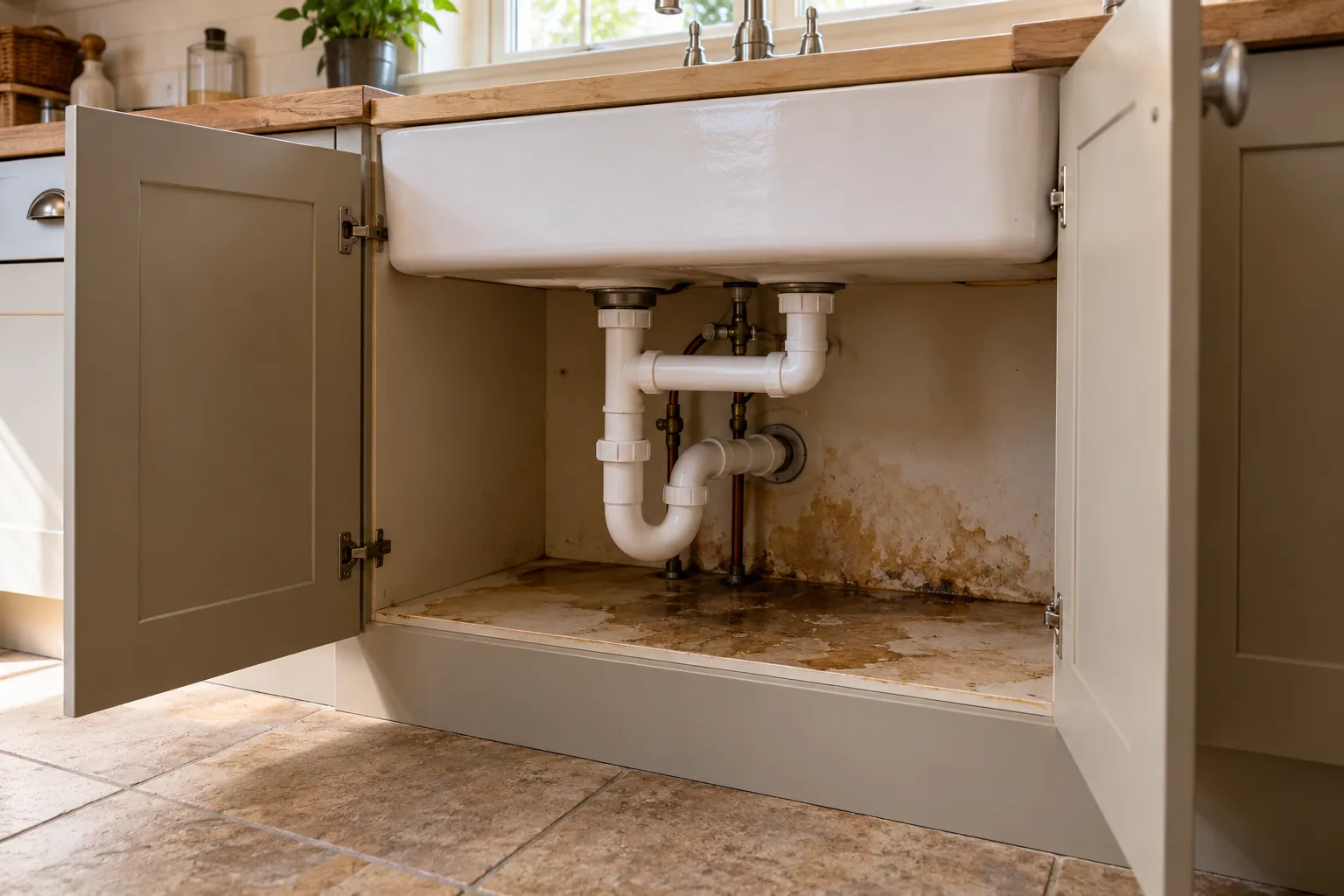
Where suitable measurements are included, a pattern across several accessible positions can be more useful than an isolated reading. The purpose is to understand the distribution of the concern and identify areas that may justify closer investigation. Readings need interpreting with the material, finish and conditions in mind; a higher indication does not itself identify a leaking component.
Ask which checks are proposed and how results will be explained. No particular meter, imaging system or specialist technique is promised on this page. Different methods have different limitations, and some may be unsuitable for the surface or access available. Findings should distinguish measured evidence from an inference about the possible source, with uncertainty recorded clearly.

Confirm any non-destructive checks
Non-destructive investigation may be appropriate where useful information can be obtained from accessible surfaces or existing openings. It does not mean that every leak can be found without access work. The suitability of a proposed check depends on the building arrangement, the suspected route and whether the problem is active when it is examined.
The agreed scope should explain what will be checked and what the result can establish. Do not assume that equipment can see every pipe behind a finished wall or distinguish all moisture sources automatically. If the evidence is insufficient, the sensible next action may be a more focused specialist investigation. Any proposed opening-up or removal of finishes should be separately discussed, including who is authorised to undertake it.
Consider intermittent sources
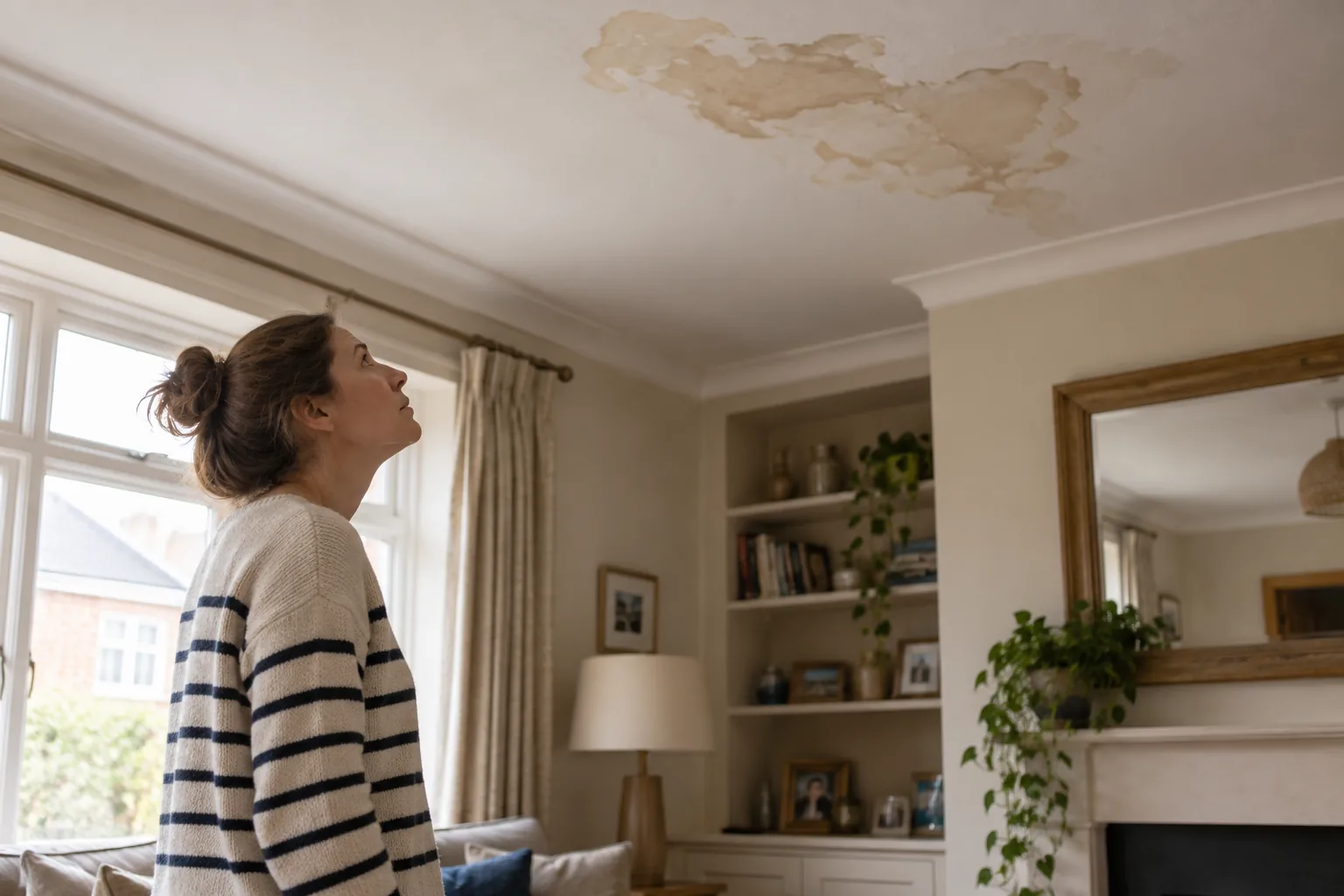
Some moisture appears only under particular conditions. A patch may change after use of a fixture, during rain or following a period of sustained occupancy. If the source is inactive during the visit, accessible observations may not reproduce the problem. A negative finding at that moment does not always exclude an intermittent issue.
Keep a simple account of when the area changes and what else was happening. Do not deliberately run a suspect appliance or introduce water to reproduce a leak without appropriate advice. The next step may be observation over time, access to a relevant fitting or referral for suitable plumbing investigation. The limitations of a single visit should be discussed before a firm conclusion is presented.

Separate plumbing concerns from other water entry
Concealed dampness may be associated with a plumbing route, but external water entry and condensation can create overlapping symptoms. The assessment should consider whether the location, timing and material pattern fit the suspected source. Evidence that points elsewhere should change the investigation rather than be forced into a leak diagnosis.
For marks that follow rainfall or sit near an outside wall, external water and gutter assessment may be relevant. Where the broader material condition is uncertain, damp inspection may help define the concern. These are related services with different questions; ordering several services is not automatically necessary if one agreed investigation can clarify the next step.
Know what detection does not include
Detection and repair are different scopes. Finding evidence of a likely route does not mean a pipe has been repaired or that water entry has stopped. Plumbing work, replacement of fittings, building repairs and decorative reinstatement are not assumed to be part of this service. Ask what would happen if the investigation identifies an area needing another contractor.
There may also be restrictions on access, use of equipment or testing in an occupied property. Permission from the person responsible for the building may be required for further work. A useful outcome should explain what was checked, what the evidence suggests and what remains unconfirmed, rather than presenting an incomplete investigation as a guaranteed location.
Agree the next action from the findings
The findings should support a decision: whether a likely source requires plumbing attention, further access is needed, a different moisture investigation is more suitable or the affected material needs monitoring. Ask whether the evidence identifies a component, a route or only an area of concern. These conclusions have different levels of certainty and should not be described interchangeably.
If a separate contractor is required, confirm what information can be provided and whether a written record is included in the agreed scope. Do not commission reinstatement solely because a suspected location has been identified. The source, repair and subsequent drying conditions need considering before damaged finishes are closed up or redecorated.
Review the affected area after source work
Once appropriate source work has been completed, the remaining material condition still needs attention. Drying is not established by a surface looking lighter, and an old stain does not necessarily mean water continues to enter. The relevant checks depend on the material, extent of wetting and what follow-up has been agreed.
Record whether the patch changes after the source was addressed. If mould is present, discuss mould inspection or treatment planning separately from leak detection. Replacing finishes too early can obscure evidence or leave an unresolved issue behind them. Any recommendation should explain the condition being checked and the limitation of the observation, without promising a fixed drying period or a guaranteed return to service.
Information that helps define the investigation
| Visible sign | Useful detail | Question to resolve |
|---|---|---|
| Ceiling stain | Rooms above and change over time | Active moisture or residual mark? |
| Damp beside a fitting | Timing in relation to use | Is there a relevant concealed route? |
| Repeated wet flooring | Affected extent and earlier repairs | Where does the moisture pattern lead? |
Detection findings and their limits
| Finding | What it may support | What it does not prove |
|---|---|---|
| Moisture pattern | An area requiring closer investigation | The exact failed component |
| Accessible route evidence | A focused next check | That concealed sections are sound |
| No active moisture observed | Condition at the time of the visit | That an intermittent source cannot exist |
Questions before arranging a visit
Will the investigation include repairing the leak?
Repair is not assumed to be included. Detection should identify the evidence and recommended next action. Plumbing or building work must be arranged under an appropriate separate scope.
Can every hidden leak be found without opening a wall?
No. Accessible checks may be useful, but concealed routes and inactive sources can limit the result. Any further access work needs separate discussion and appropriate permission.
Should I repaint the stain before the visit?
Explain its present condition and ask about preparation. Covering the mark can remove useful context. A photograph of the earlier appearance may help if decoration has already occurred.
What if the patch is dry during inspection?
The history and any appropriate checks may still be useful. An intermittent source might require observation or a more focused investigation under relevant conditions.
Does a moisture reading locate a leak?
A reading can contribute to an assessment of the affected material. It does not identify a leaking component by itself; the distribution, material and possible routes need interpreting together.
Discuss your property
Call +44 20 3966 3944 to describe the affected area and agree the next step. Enquiries are welcome from Wembley, HA0 and HA9. Photography is AI-generated illustration, not evidence of completed customer work.