
WEMBLEY · HA0 & HA9
External Water & Gutter Issues in Wembley
Review visible rainwater routes and their possible relationship to damp inside the property. An assessment should distinguish an observed external concern from a confirmed source of water penetration.
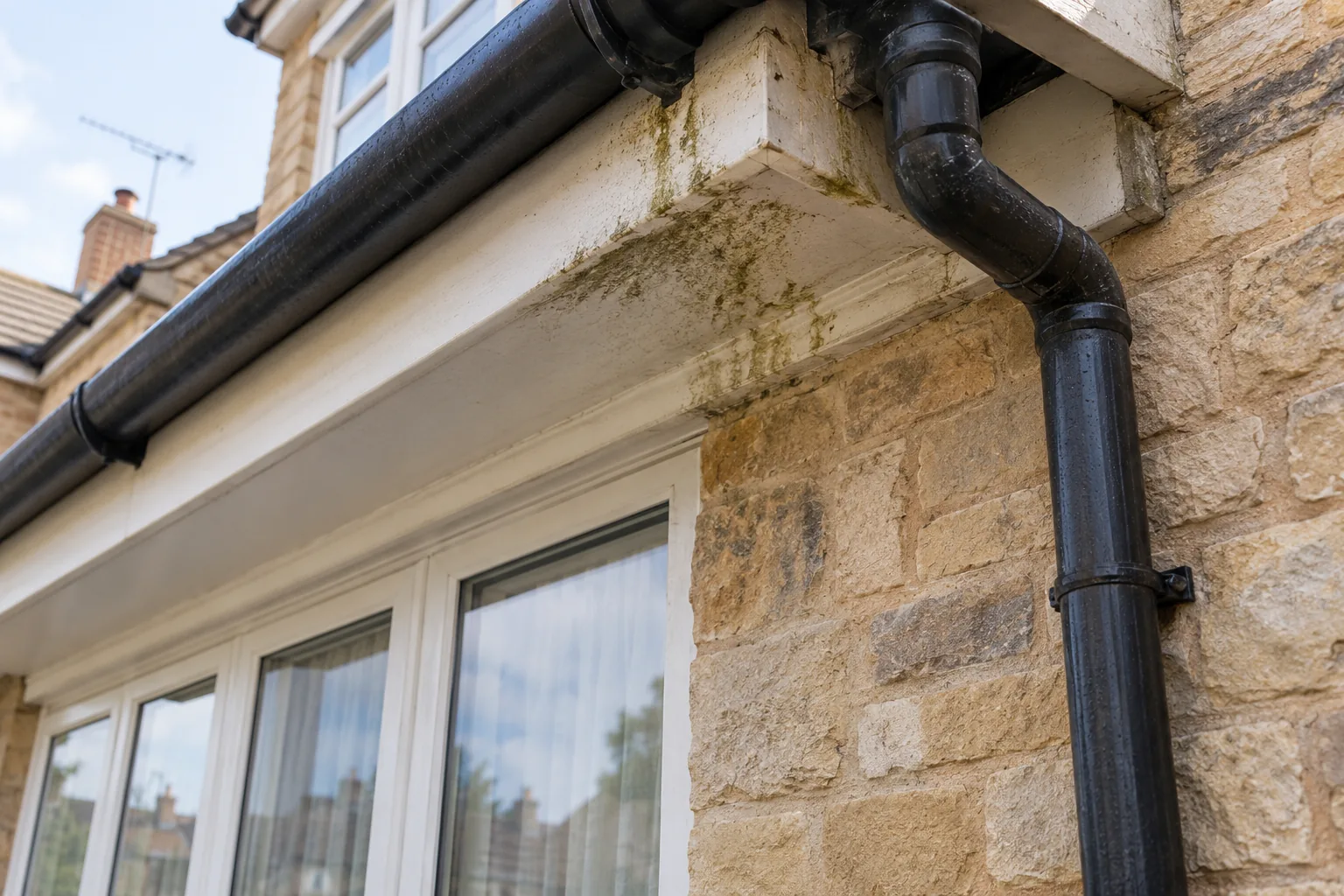
Does internal damp after rain mean the gutter is leaking?
It is a useful detail, but it does not prove the source. The external arrangement, visible condition and position of the internal mark need considering together.
Do you inspect Wembley homes in HA0 and HA9?
Enquiries are welcome from both postcode areas. Explain the affected elevation, access and whether the concern can be seen safely from ground level.
Describe the link between weather and damp
Tell us where water or staining appears and whether you have noticed a relationship with rainfall. Include which side of the property is affected, which rooms show marks and whether the concern changes during prolonged or wind-driven rain. A clear description helps define the observation needed without assuming that the nearest visible gutter is responsible.
Mention any recent changes to drainage, external finishes or adjoining structures. If previous clearance or repairs have been carried out, explain what was done and whether the symptom changed afterwards. The scope should be agreed around accessible observations, with any need for specialist access or further contractor investigation identified before a visit is arranged.
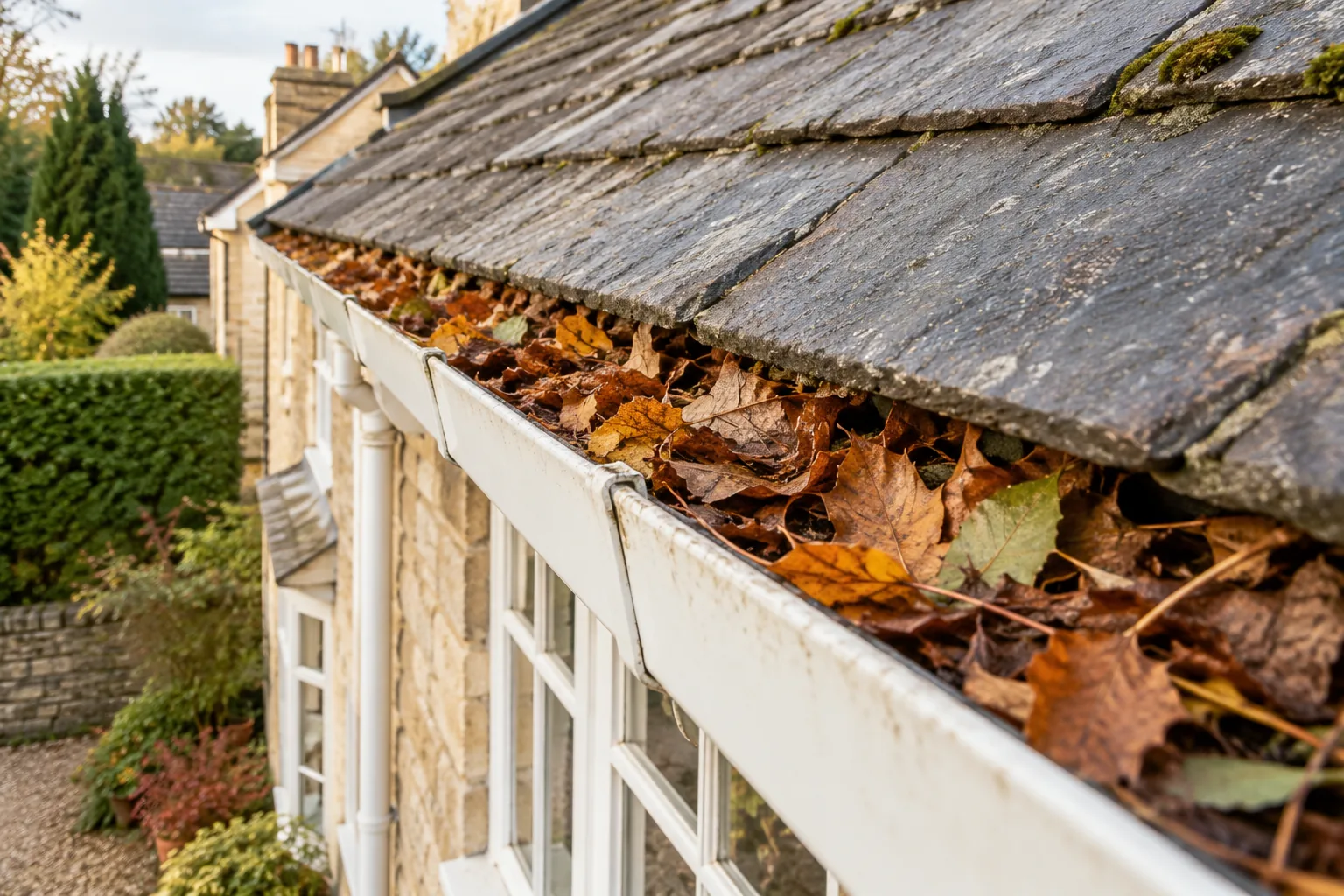
Review the visible gutter arrangement
The position of gutters, joints, outlets and visible overflow marks can help guide an assessment. Relevant signs may include staining below a joint, debris visible from a safe position or water appearing to pass over an edge. These signs should be described as observations; they do not establish the condition of every concealed connection or prove how the system behaves during all weather.
A ground-level view may be restricted by height, neighbouring structures or vegetation. Do not climb onto a roof or ladder to obtain photographs for an enquiry. Any higher-level inspection requires suitable access and a separately confirmed scope. Gutter clearance, replacement and repairs are not assumed to be included in an assessment of external water concerns.
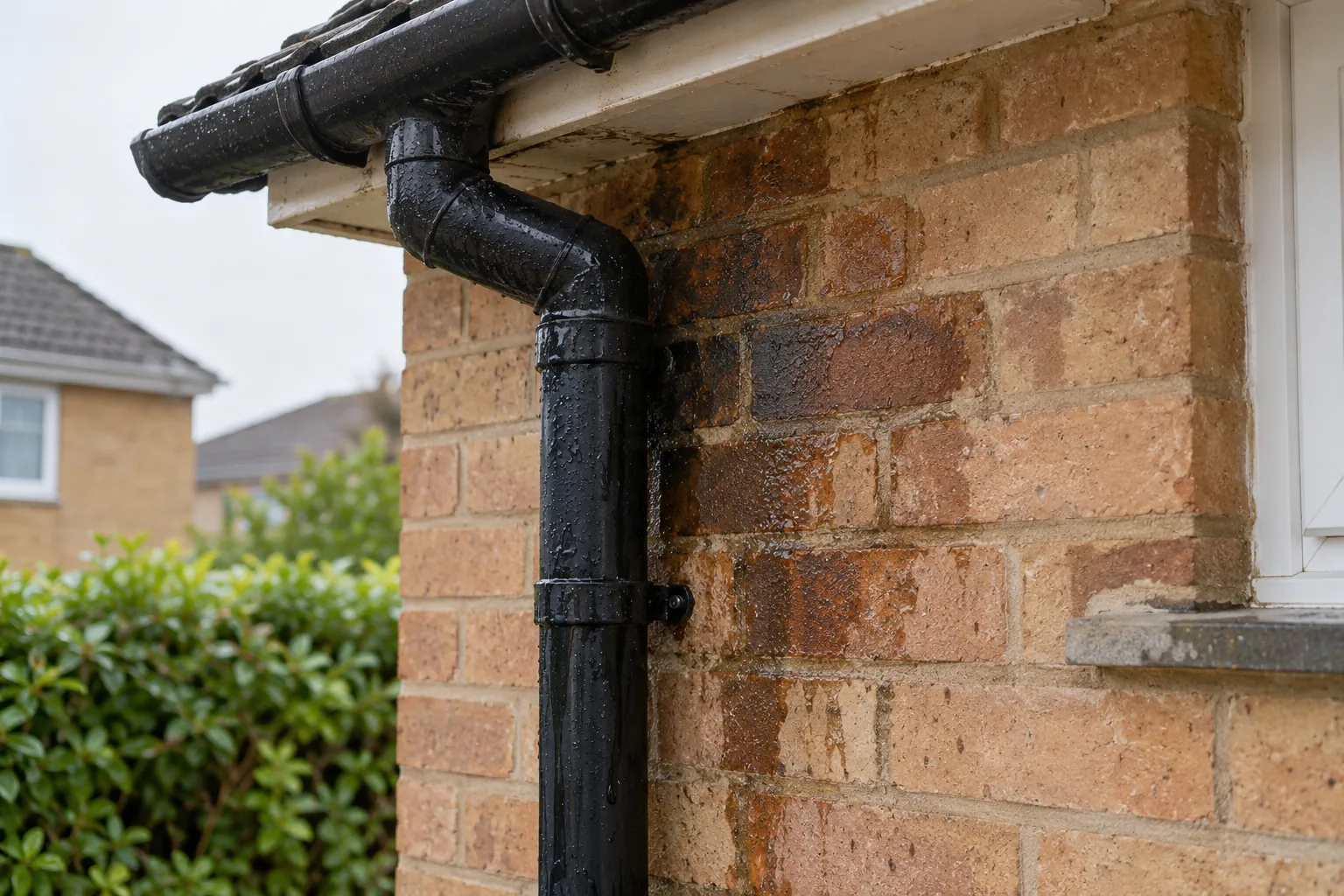
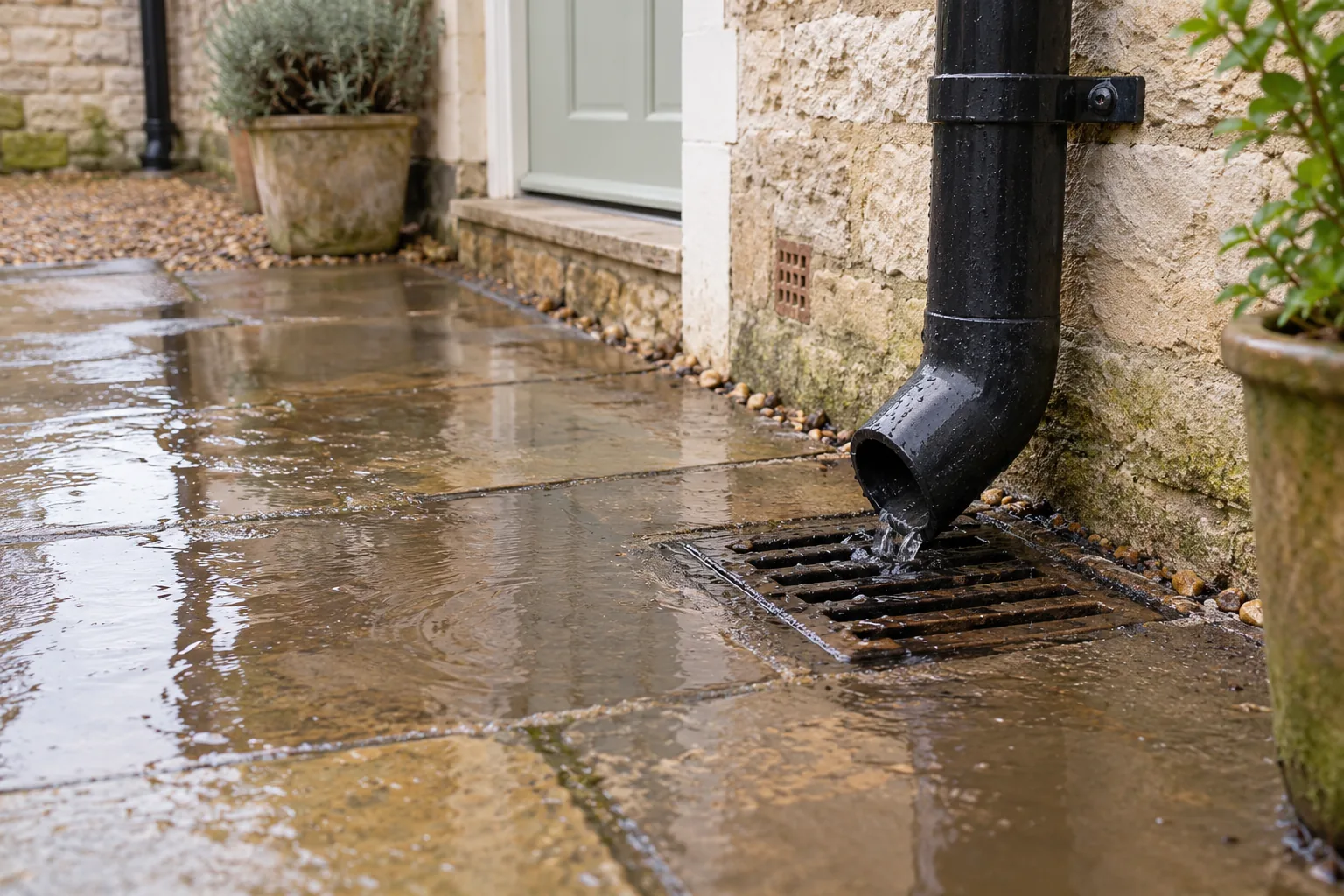
Follow downpipes and discharge routes
A downpipe should be considered as part of the visible rainwater route rather than an isolated feature. Its joints, position and apparent destination may be relevant to staining or wetness around the building. Where a discharge point is hidden, enclosed or below ground, its performance cannot be established merely from the appearance of the pipe above it.
Describe whether water collects at the base of the wall or whether marks follow a particular pipe route. The assessment may identify a reason for further drainage or contractor investigation, but it should not promise a below-ground diagnosis from an external visual review. Ask which accessible elements are included and how any uncertainty about the discharge arrangement will be communicated.
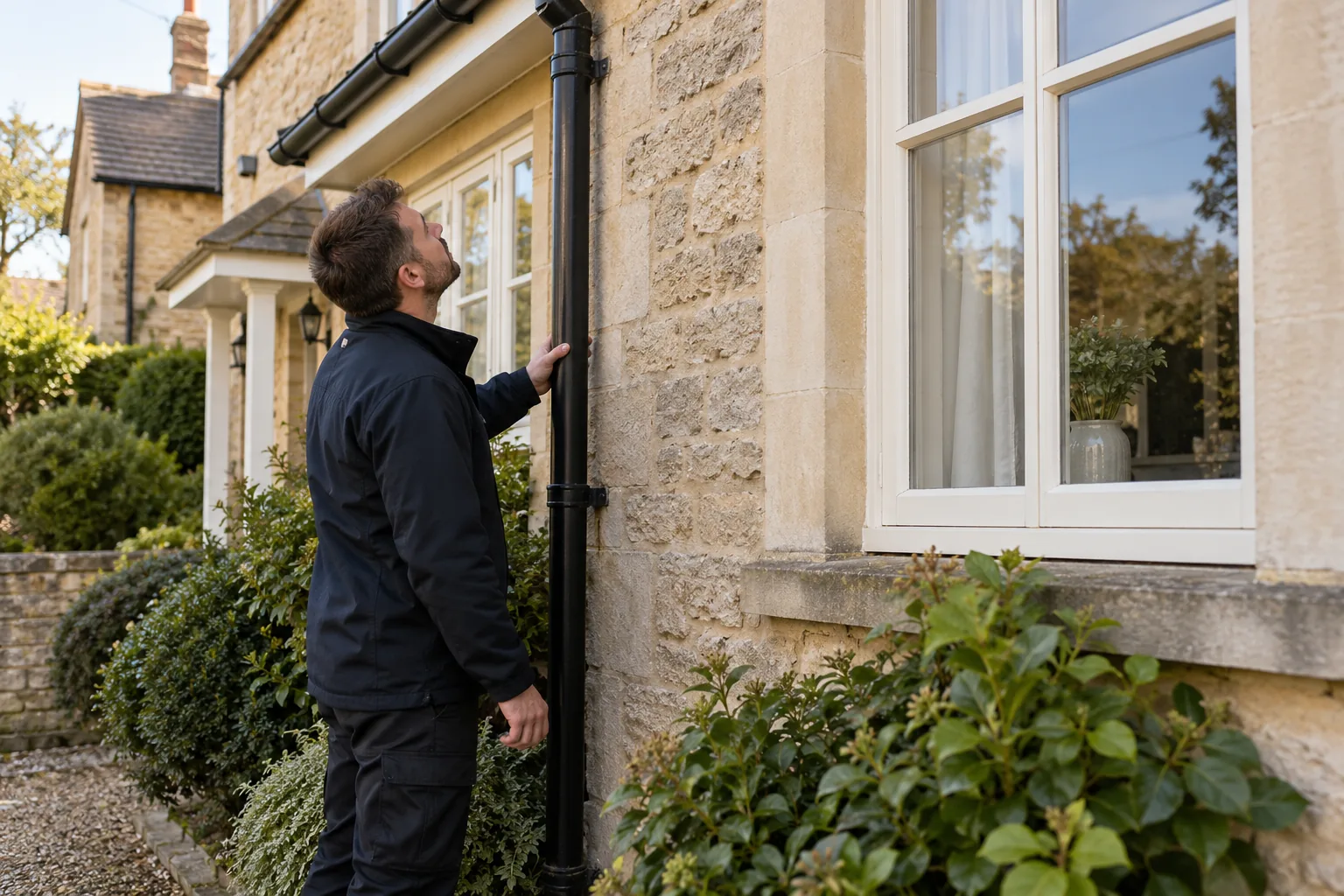
Read external wall staining carefully
Dark streaks, algae, discolouration and damaged finishes may show where water has been present, but appearance alone does not establish whether moisture is entering the building. The wall material, location of the mark and its relationship to nearby rainwater features all matter. A stain may be old, intermittent or unrelated to the internal symptom being investigated.
The assessment should compare external and internal positions where access permits. Tell us whether an internal mark appeared before or after the external change was noticed. Avoid assuming that repainting or sealing the visible external area is the correct remedy. The next action should follow the evidence and, where necessary, assessment by an appropriate building contractor.
Connect outside observations with indoor evidence
The useful question is whether the external concern plausibly relates to the affected material inside. Height, wall position, adjacent openings and the timing of dampness can contribute to that review. Internal finishes may obscure the route, and water can travel before it becomes visible. A direct alignment between two marks is informative but not conclusive by itself.
If the indoor condition requires closer review, damp inspection may help interpret the affected materials. Where mould is the main visible symptom, mould inspection can consider growth and surrounding conditions. The services should be selected around the question to be resolved, not automatically combined without explaining why additional work is useful.
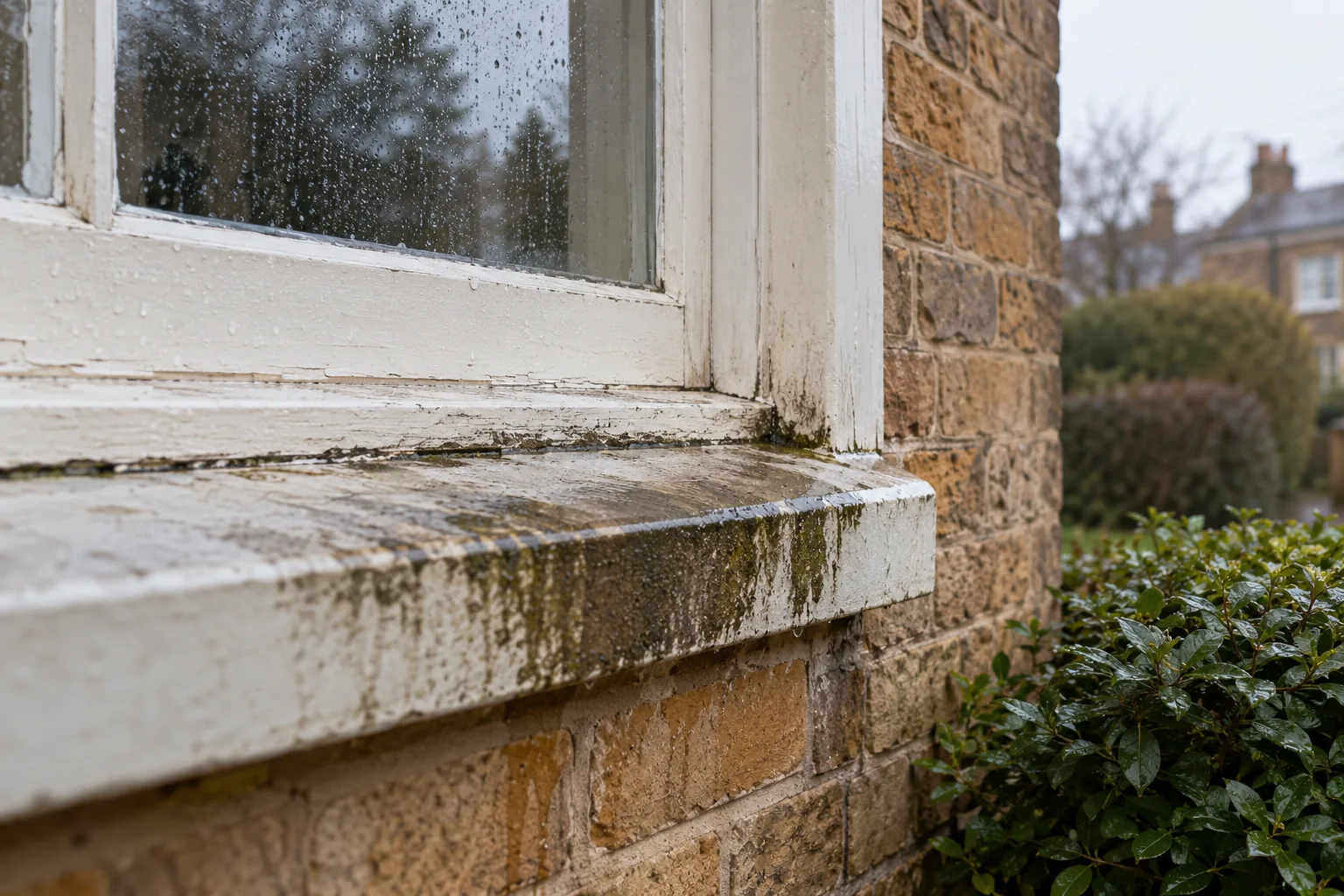
Consider openings and adjacent details
Water concerns may involve the areas around windows, external finishes and other building details as well as rainwater goods. An assessment should notice where the observed pattern does not fit a simple gutter explanation. The precise scope of any building-fabric investigation needs confirming; this service does not imply roof inspection, structural diagnosis or an examination behind every finish.
Tell us about earlier repairs, extensions or changes near the affected area if you know them. Where a detail is inaccessible or its construction is uncertain, a competent contractor may need to investigate further. The finding should make clear whether it is an observed defect, a possible route or an issue outside the agreed scope.

Understand dry-weather limitations
A visit made in dry weather may reveal staining and accessible condition but not reproduce an overflow or intermittent penetration event. Lack of visible water during the inspection does not establish that the arrangement works under heavy rainfall. Equally, an old mark should not automatically be described as an active failure. The weather and conditions at the time are part of the interpretation.
A useful history can reduce uncertainty. Note whether the symptom occurs during all rain or only particular weather. Photographs taken safely from accessible positions during an event may help explain the concern. Do not introduce water, block an outlet or attempt to reproduce a fault for the assessment without appropriate professional advice.
Distinguish assessment, clearance and repair
Assessment identifies observations and potential next steps. Clearance removes material from a rainwater route, while repair changes a damaged or unsuitable component. These activities require different scopes and should not be treated as interchangeable. A recommendation for clearance does not confirm that it has been performed or that it will resolve every internal damp mark.
Where work by another contractor is advised, ask what needs checking before the work is specified. Roofing, building, plumbing and drainage repairs are not promised as part of this service. The responsibility for arranging any necessary access, permission and remedial work should be clear. Avoid proceeding to decoration solely because an external concern has been identified.
Agree a proportionate next step
Findings may support further accessible inspection, clearance by an appropriate contractor, repair assessment or review of the internal material condition. The recommendation should explain the link between the evidence and proposed action. It should also say what remains uncertain and whether the suggested work addresses a confirmed defect or a plausible contributing condition.
If the pattern suggests an internal service rather than rainwater entry, hidden leak detection may be more appropriate. If condensation remains possible, the relevant room conditions may need separate attention. A clear assessment leaves the customer with an understandable decision rather than a broad list of unrelated repairs or an unsupported guarantee.
Review the property after external work
After an appropriate contractor has completed clearance or repairs, observe the original symptom under relevant conditions. Record whether overflow recurs, whether water still collects near the wall and whether the internal patch changes. A single dry day does not demonstrate performance in rain, and an internal stain can remain after the source has been addressed.
The affected material may need time and appropriate checks before reinstatement, depending on its condition and extent of wetting. No fixed drying period can be promised from the description alone. If mould remains, treatment planning should consider the material and remaining moisture risk. Follow-up should distinguish the performance of the external route from the condition of finishes inside the home.
External observations and the questions they raise
| Observation | Useful comparison | What may need checking |
|---|---|---|
| Staining below a gutter joint | Internal mark position and rainfall history | Joint condition and water path |
| Wetness at downpipe base | Visible discharge destination | Outlet and drainage route |
| Wall streaking | Material and surrounding details | Whether water entry is plausible |
| Damp after driving rain | Affected elevation and openings | Building-fabric investigation |
Scope and contractor responsibilities
| Activity | Assessment purpose | Separate work to confirm |
|---|---|---|
| Visible rainwater review | Identify accessible signs and limitations | High-level access or concealed examination |
| Clearance recommendation | Explain a possible obstruction concern | Clearance arrangements and safe access |
| Repair referral | Identify a detail needing specialist review | Repair specification and reinstatement |
Questions before arranging a visit
Does this service include clearing the gutter?
Clearance is not assumed to be included. The assessment may identify signs that justify clearance by an appropriate contractor, but the work and access arrangements must be confirmed separately.
Can the cause be confirmed from ground level?
Some accessible observations are useful, but height, concealment and dry weather can limit conclusions. The scope should distinguish what can be seen from what needs specialist access.
Should I climb up and photograph the gutter?
No. Describe what is visible safely from accessible positions. Explain any access restrictions so the appropriate scope can be discussed.
Will repairing a gutter immediately remove an indoor stain?
A stain can remain after water entry stops. The affected material and any residual moisture need considering separately before decoration or other reinstatement.
What if the damp continues after external repairs?
Record the pattern and timing and discuss a review. The repair may need checking, the material may retain moisture or a different source may require investigation.
Discuss your property
Call +44 20 3966 3944 to describe the affected area and agree the next step. Enquiries are welcome from Wembley, HA0 and HA9. Photography is AI-generated illustration, not evidence of completed customer work.