
WEMBLEY · HA0 & HA9
Damp inspection in Wembley
Arrange a damp inspection to examine the pattern of wetting, affected materials and the questions that need resolving. Useful assessment interprets signs in their setting rather than assigning a cause to every stain or measurement in isolation.
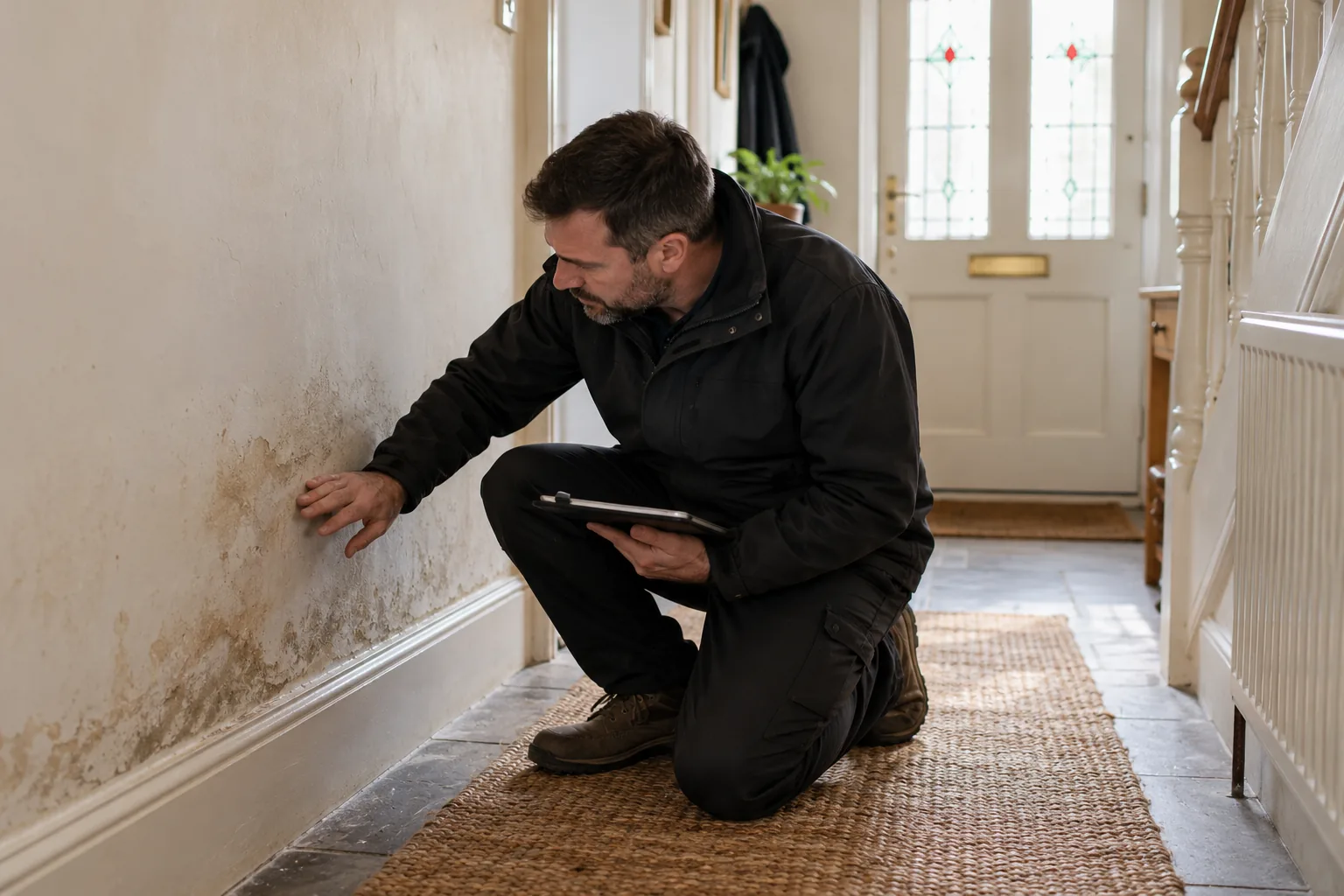
What helps with a damp enquiry in HA0 or HA9?
Describe the surface, room, timing and any relationship with rain or previous leaks. Give your Wembley postcode and explain access restrictions.
Does one reading establish the cause?
Measurements need context: material, location, method limitations and other evidence. A number alone should not determine a diagnosis or repair specification.
Describe the patch and its changes
Start with the location rather than a label such as penetrating damp. Explain the height and shape of the mark and whether it affects a wall, floor or ceiling. Colour changes, flaking paint and visible wetness should be described separately. Say whether the area worsens after rainfall, remains in dry periods or follows indoor activities. These details guide questions but do not confirm a cause. An old stain can remain after conditions change, while a small mark may require a wider assessment. The visit should consider what appears current and what belongs to the earlier history.
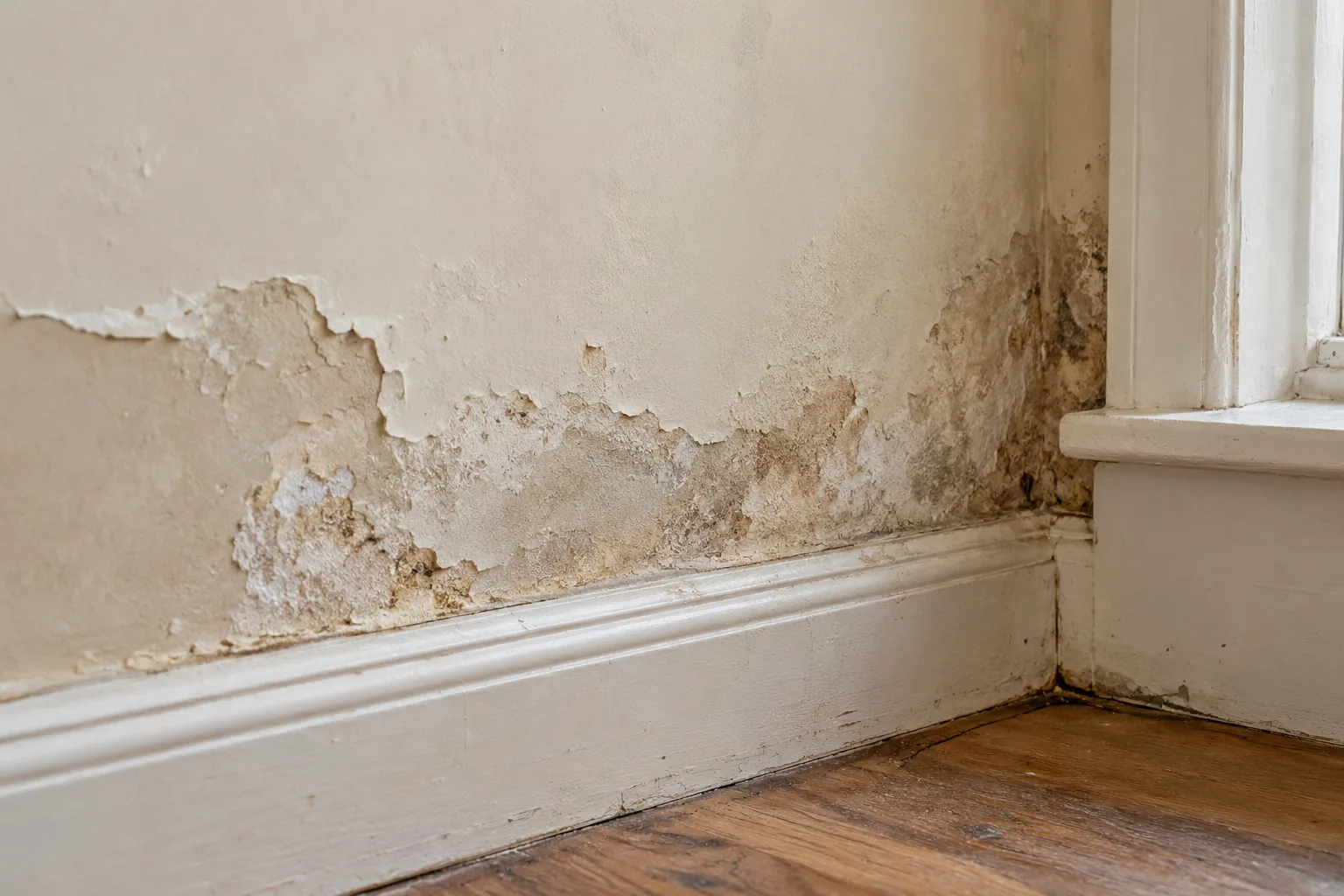
Clarify the assessment scope
Explain the rooms and decisions involved, such as whether investigation is needed before treatment or decorating. Confirm whether external areas are relevant and accessible. The proposal should state what the visit examines and what outputs are included. Do not assume it covers a full building survey, invasive opening-up, leak tracing or a report for a particular formal purpose. If information is needed by a landlord, insurer or contractor, say so before booking. The service should be checked against its intended purpose rather than described afterwards as broader than the agreed scope.
Consider affected materials and nearby fabric
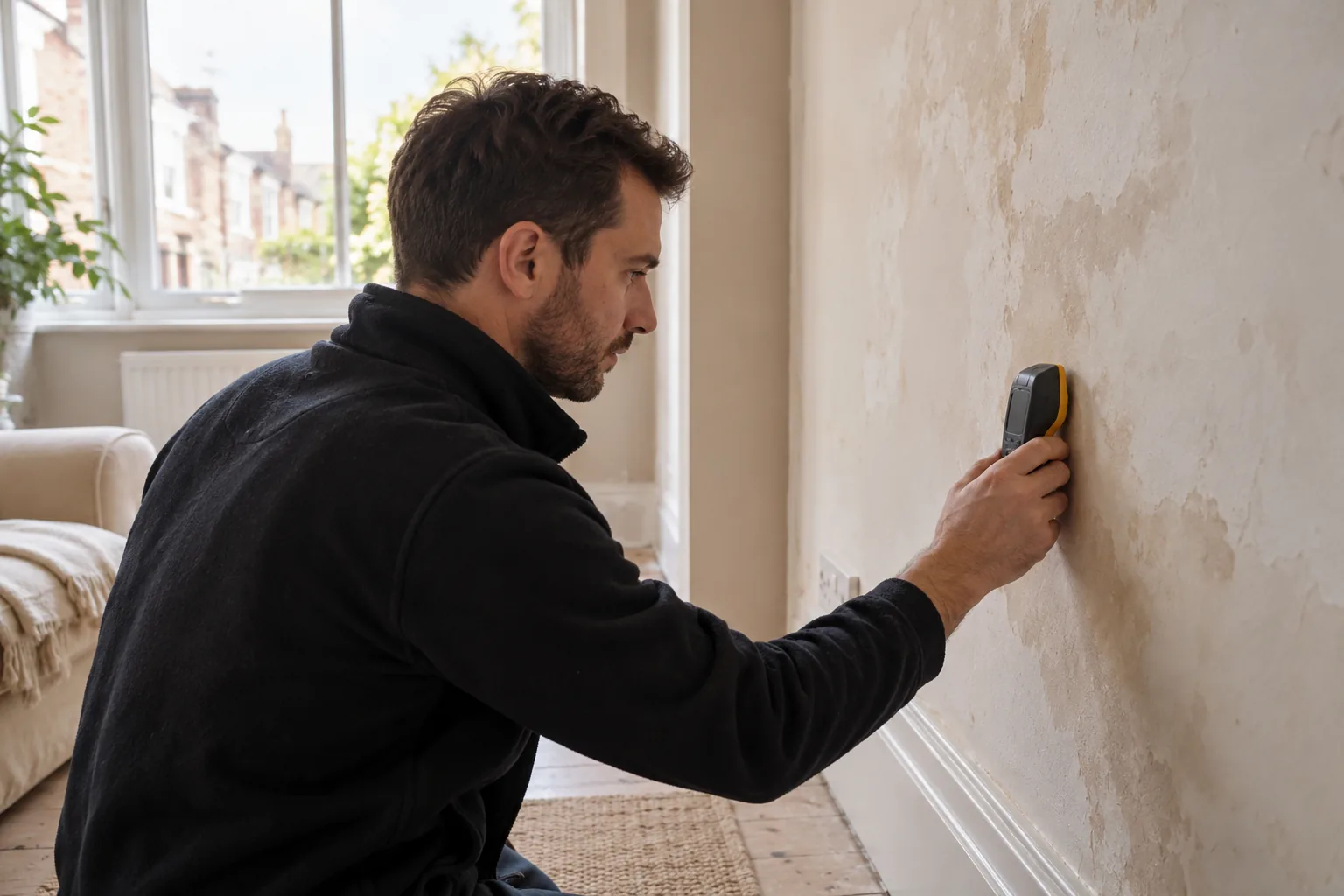
Paint failure, damaged plaster, swollen timber and ceiling staining raise different questions about duration and wetting. Review relevant edges and surrounding materials rather than focusing only on the darkest part of a mark. Explain previous repairs, replacement finishes or coverings that may have changed visible evidence. A fresh finish may hide an earlier pattern; a decorative stain may remain after drying. If underlying condition cannot be established without access, the limit needs explaining. Inspection does not promise that every affected finish can be retained or restored, and the next action must reflect the material itself.
Give measurements a clear purpose
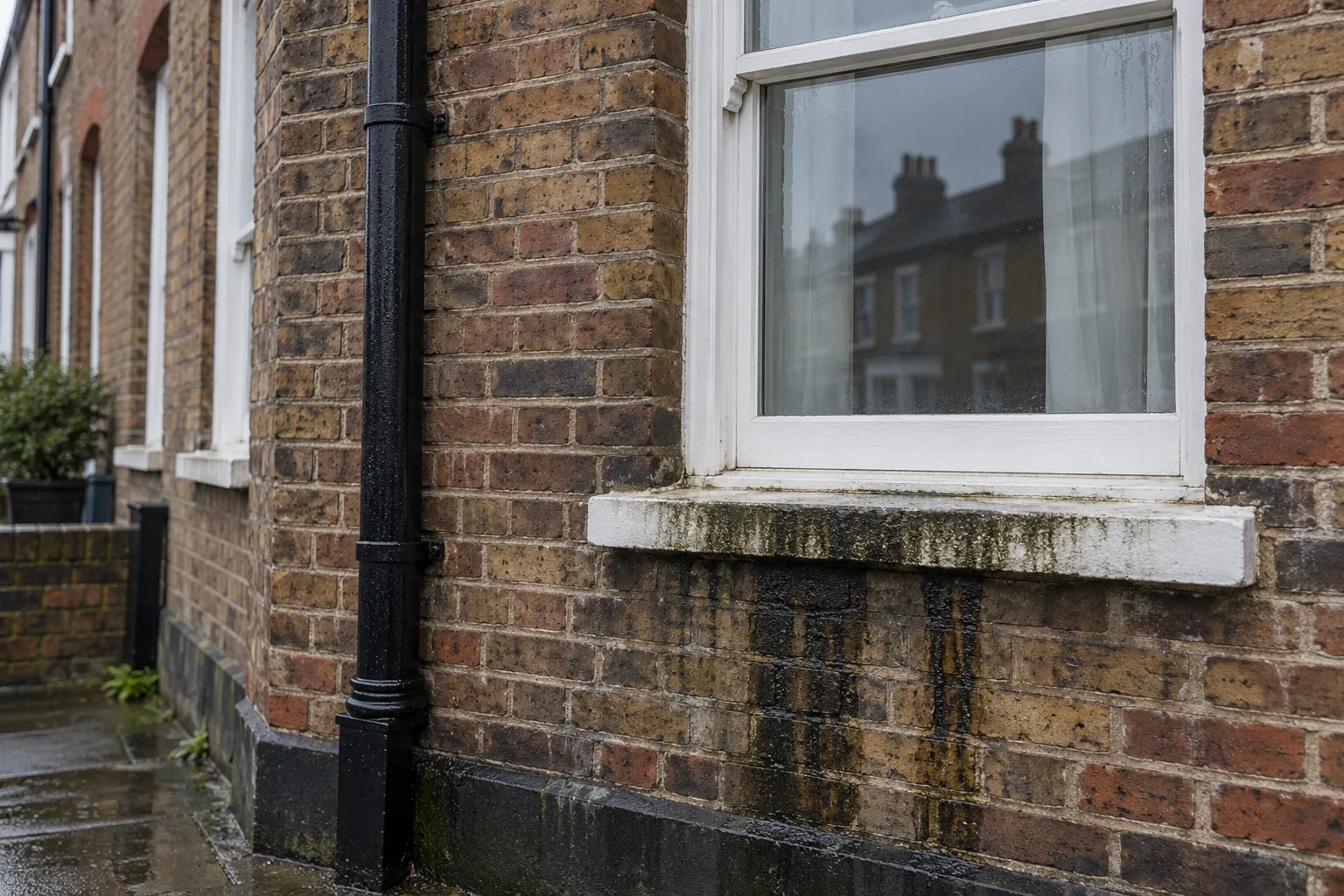
Measurements may be appropriate for comparing locations or understanding a moisture pattern. Method suitability depends on the material and the question being asked. The purpose, context and limitations need explaining before a result is treated as a conclusion. No particular instrument or testing procedure is claimed here. Ask what the proposed checks help distinguish and what other evidence supports their interpretation. A relative difference between points can be informative without confirming hidden water or a specific defect. Where the source remains uncertain, additional investigation may still be needed despite having obtained numerical readings.
Distinguish condensation from water entry
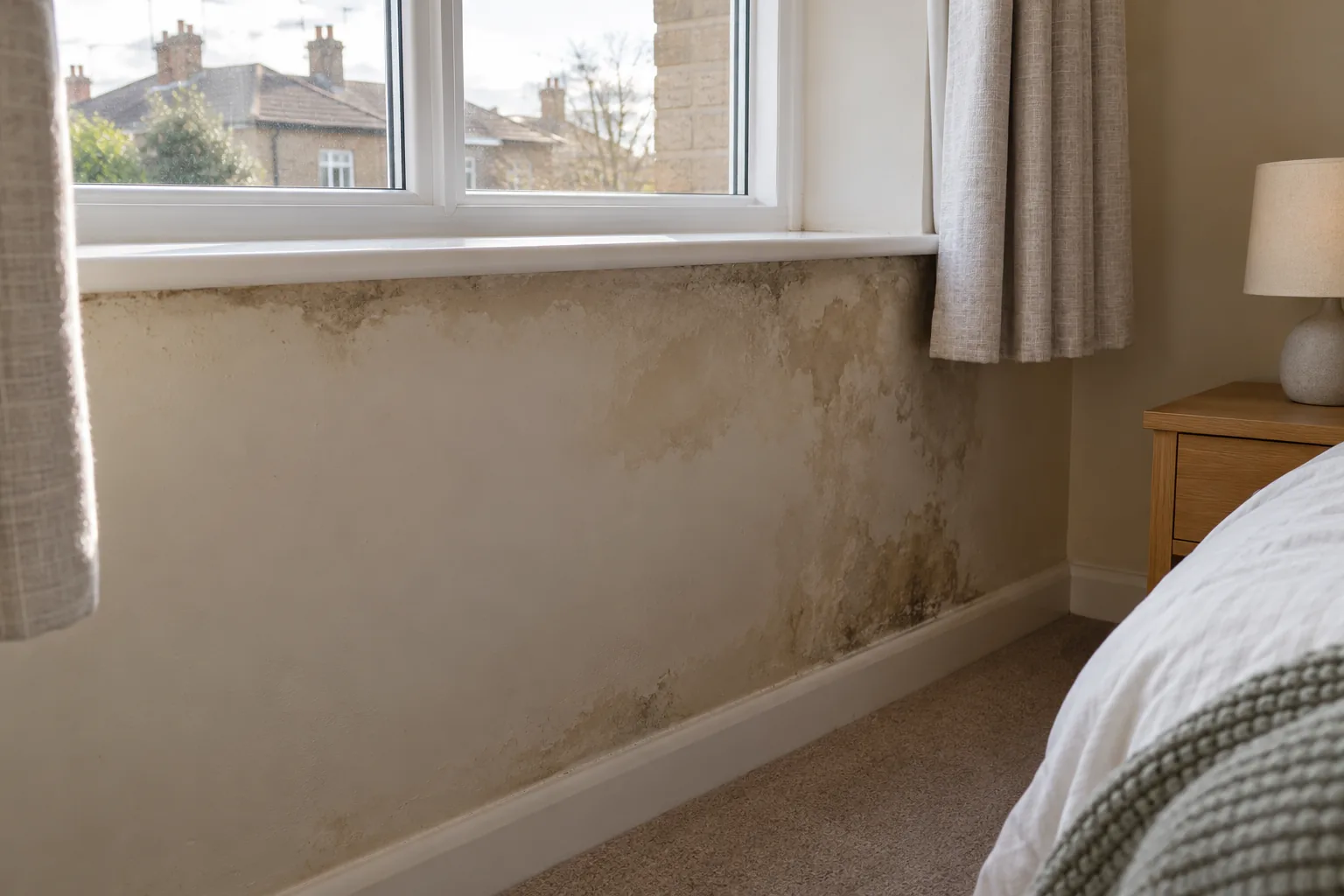
Condensation may be relevant where cold surfaces, droplets and recurring corner growth occur together. Water entering from outside raises questions about rainfall, wall condition and rainwater routes. Both need considering in context; more than one condition can affect a room. Avoid committing to one explanation from room type or patch location alone. A focused condensation investigation may help where everyday moisture and surface conditions need reviewing. If evidence points elsewhere, the next step should follow that evidence and available access rather than a standard repair recommendation used for every property.

Review possible external water sources
An internal patch near an outside wall can justify questions about weather, external staining, gutters and downpipes. Assessment can only rely on areas viewed safely within the agreed scope. Concealed junctions, roof details and high-level defects may require other arrangements. Discuss external water and gutter issues where relevant and describe accessible elevations. A visible possible defect does not by itself prove the cause of an internal mark. Clearance, repairs and building work need separate confirmation with an appropriate contractor. Damp inspection must not be presented as including those tasks.
Account for previous leaks
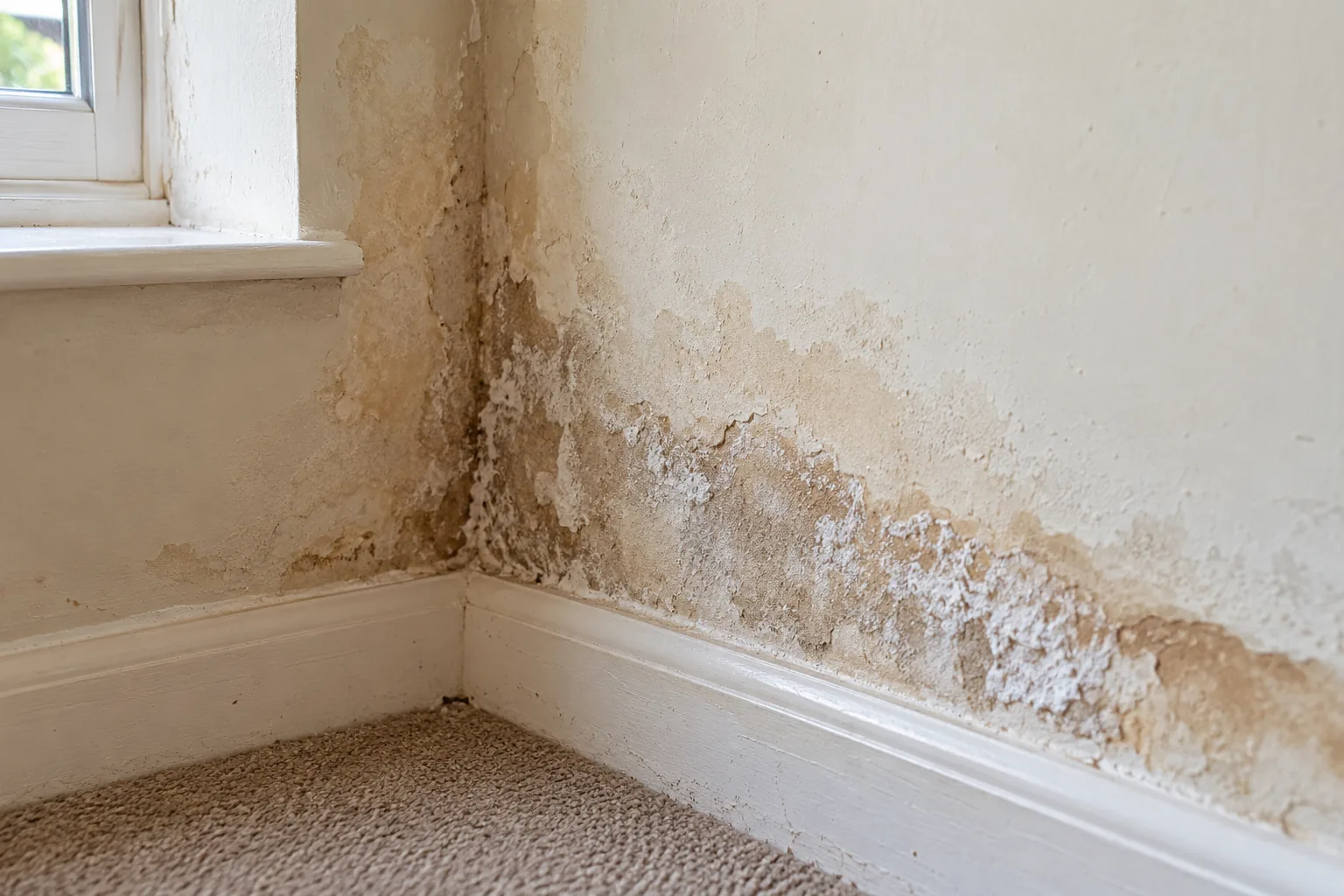
A repaired leak may leave effects in surrounding materials. Explain when it occurred, which areas became wet and what repair or drying work was completed. Persistent dampness may also raise questions about concealed water routes; the visible patch need not lie directly below a source. If tracing is appropriate, discuss the scope of hidden leak detection. Non-destructive checks may suit some settings, while others require access or another specialist. A single visit should not be assumed to locate every concealed source or confirm that all previously wet materials have dried.
Interpret evidence as a connected picture
Findings should connect the visible pattern, material condition, history and any measurements. Direct observations need distinguishing from suspected causes and unresolved questions. If more than one explanation remains possible, ask what information would help separate them. This makes a repair decision more useful than one based on an isolated symptom. Recommendations should explain why a next check matters and what question it addresses. Access limits should remain visible in the explanation. Uncertainty is information needed for a decision, not something to replace with a definite-sounding label unsupported by the available evidence.
Agree responsibility for subsequent work
The next step may be monitoring, focused investigation, source-related work or assessment of damaged finishes. Ask what should happen first and how completion informs the following decision. Treating visible growth is different from correcting continuing wetting. Inspection does not include plumbing, roofing or building repairs unless a separate confirmed arrangement says otherwise. If another contractor is needed, clarify the area and question their work should address. Keep the findings available when seeking proposals so requested work starts from the same observations and limitations, rather than an assumption repeated without its original context.
Plan checks before decorating
Material change depends on its type, wetting and surroundings. A universal drying period or decorative timetable cannot be promised from a description. Ask what observations or checks are relevant before further work is arranged. If monitoring is recommended, record whether the patch changes or new areas appear, and what happens after relevant weather or room use. Dated descriptions help compare conditions after an intervention. Where a suspected source has been addressed but a mark remains, a later decision should distinguish decorative appearance from current moisture concerns and take account of the original material findings.
Decisions to clarify before arranging work
| Sign | Assessment question | Possible next enquiry |
|---|---|---|
| Changes after rain | Which external routes correspond? | External water review |
| Droplets and cold corners | When does moisture collect? | Condensation investigation |
| Patch after a leak | What became wet and was repaired? | Materials or tracing |
| Softened finish | How extensive is damage? | Suitability and separate repair |
| Evidence | Useful contribution | Limit |
|---|---|---|
| History | Timing and relevant changes | Reported events may need checking |
| Material condition | Nature and extent of damage | Hidden layers may differ |
| Measurement | Comparison in a suitable context | Reading alone does not prove source |
| Weather relationship | Frames external questions | Correlation does not prove a defect |
Practical questions about this service
Does a high reading prove penetrating damp?
A reading needs interpretation alongside material, location and other evidence. It should not alone confirm penetrating damp or prescribe repairs. Ask what it establishes and which questions remain open after that check.
Can a stain remain after repair?
Yes. Appearance and current material condition are separate questions. Explain the event and repair history so the visit can consider historical marks, remaining effects and checks appropriate before further finishing work.
Do you repair gutters or plumbing?
Repairs must not be assumed to be included. Inspection can identify questions for another contractor. Plumbing, gutter clearance, roofing and building work each require their own confirmed scope and arrangements.
Should I uncover a wall first?
Discuss access before removing finishes. Opening an area changes evidence and creates additional work. Describe what is covered and why, so any need for authorised access can be considered with a clear purpose.
Can you give a repainting date?
The decision depends on material condition, cause and work needed. A fixed timetable cannot be promised from a description. Ask which conditions need checking before decoration and whether later reassessment would be useful.
Information to prepare for the discussion
Locate the damp evidence: describe the wall, ceiling or floor position and whether the concern is a stain, damaged finish or material that remains wet. Include its relationship to outside walls, windows, rainwater features or known internal service routes. Distinguish an old mark from a recently changing area.
Record the conditions around it: mention changes after rainfall, heating or normal use of nearby rooms. Explain earlier repairs and whether the area was allowed to dry afterwards. These details help guide interpretation of any suitable measurements, without treating a reading or surface appearance as proof of one cause.
Clarify the decision you need: explain whether the priority is further source investigation, understanding material condition or deciding when treatment or reinstatement could be considered. Ask which accessible areas and checks are included. If the evidence may require another contractor, agree how that recommendation and any unresolved uncertainty will be communicated.
Discuss the next step for your property
Call +44 20 3966 3944 with your Wembley postcode and the affected rooms. Ask what the proposed visit would examine, what can reasonably be established and which questions may remain. The scope and access requirements should be clear before arrangements are confirmed.
Photographs are generated illustrations. They do not depict verified company staff or completed customer work.