
WEMBLEY · HA0 & HA9
Mould inspection in Wembley
A mould inspection examines visible growth and the conditions around it so the next decision has a clear basis. Discuss affected surfaces, returning marks and access before assuming treatment or repairs are the right starting point.
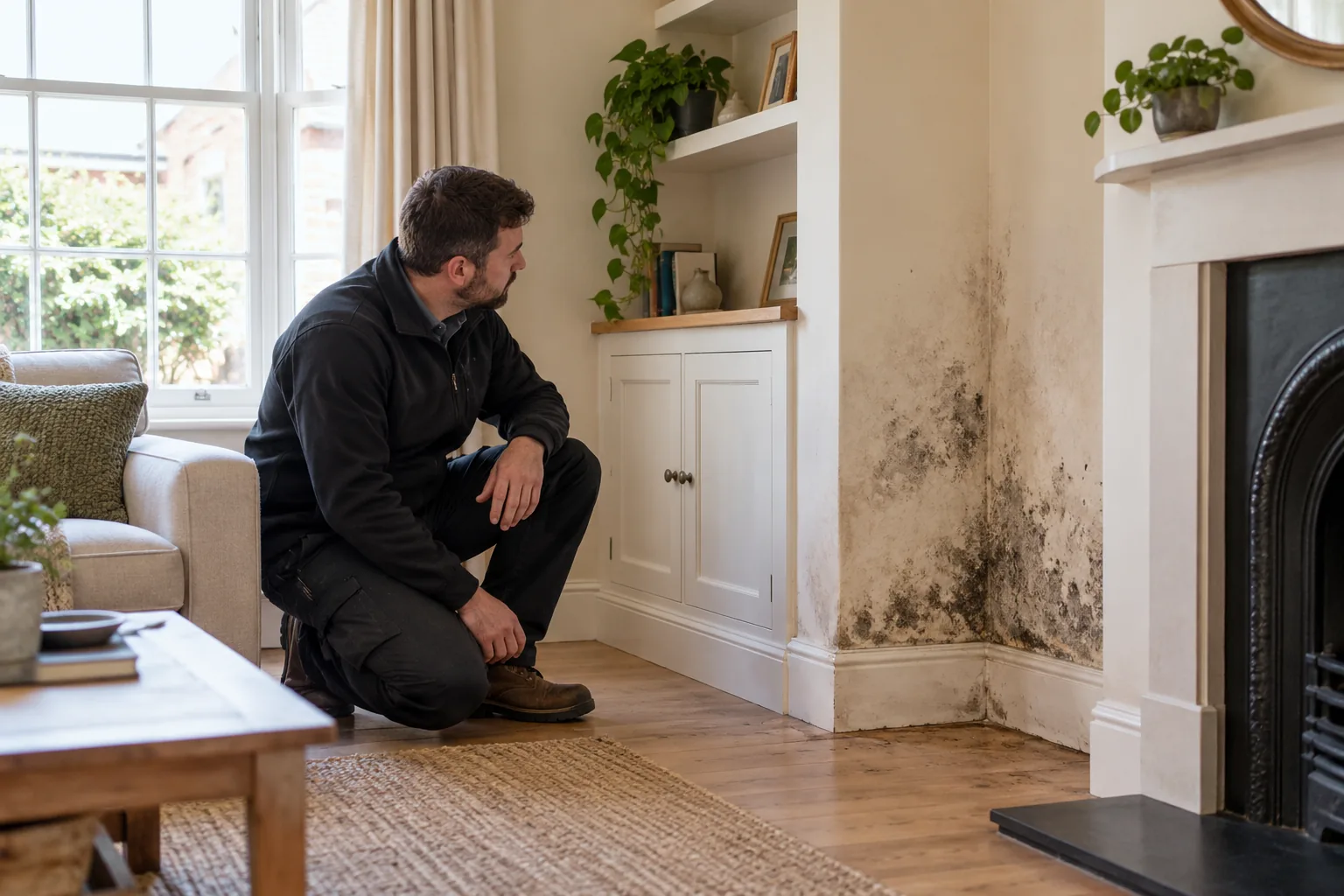
What should I mention about my Wembley home?
Give your HA0 or HA9 postcode, the affected rooms and whether growth is new or recurring. Mention concealed areas and restricted access before the scope is agreed.
Does inspection identify every hidden problem?
Visible assessment has access limits. Growth within cavities, behind finishes or behind fixed fittings cannot be ruled out without suitable access or additional agreed investigation.
Define the questions to be answered
Begin with the decisions you need to make. You may want to understand the extent of growth, why a patch keeps returning or whether treatment is suitable for a particular material. State these concerns when calling rather than requesting an unspecified general check. Explain who can authorise access and whether the property is occupied or awaiting other work. The proposed scope should identify areas to be viewed and any outputs included. A written report, sampling or specialist survey must not be assumed to form part of the service unless confirmed. The agreed purpose determines whether the visit is appropriate for your needs.
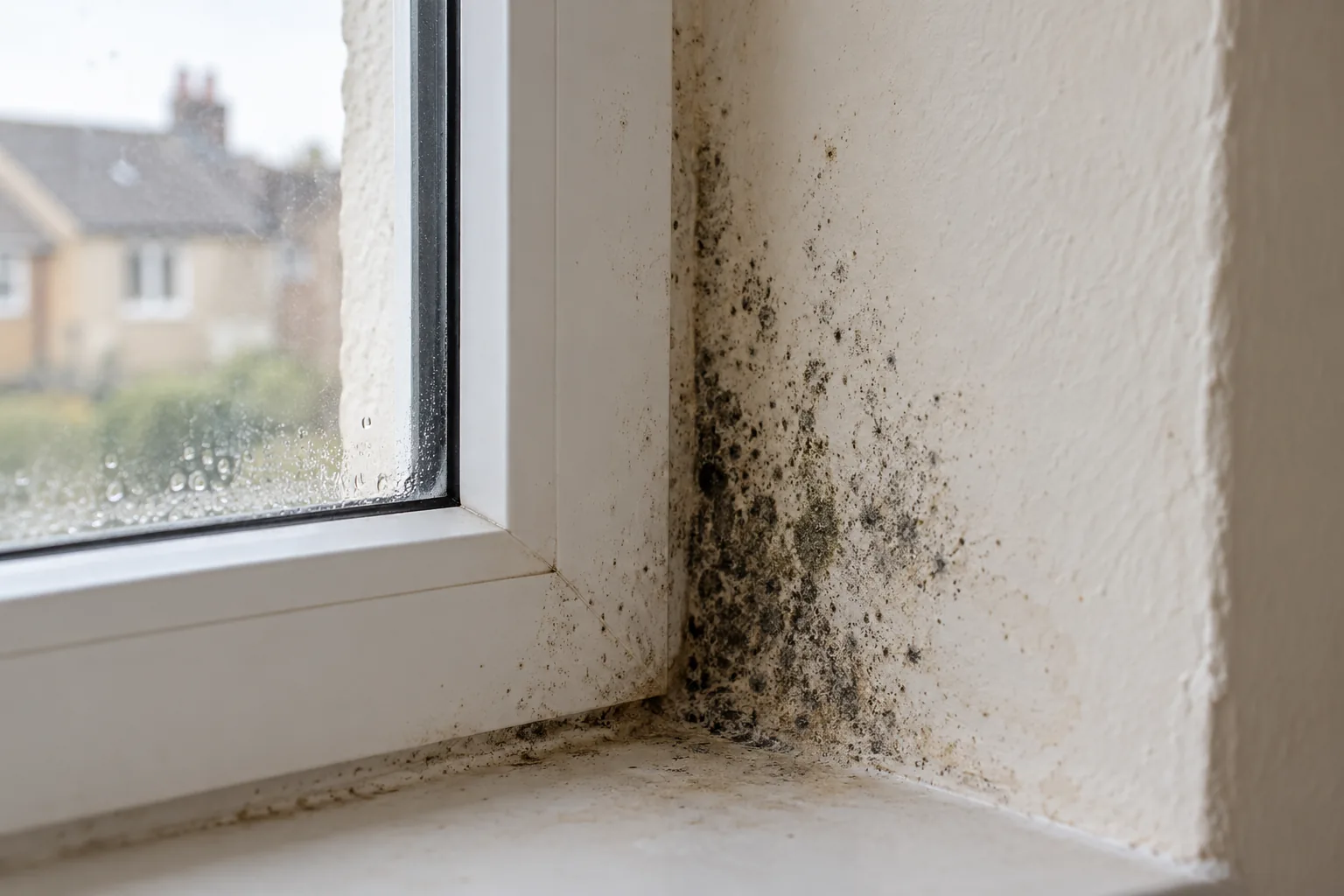
Build a useful history
Describe when growth first appeared, whether it changes with weather or room use and what cleaning or decorating has taken place. Earlier photographs can help describe a previous extent if their dates and subsequent changes are explained. Mention leaks or work near the affected area without treating them as a confirmed cause. A historical event can be relevant while current conditions still need reviewing. If information comes from another occupier or contractor, say so. This allows reported events, direct observations and assumptions to remain distinct when the findings and next steps are discussed.
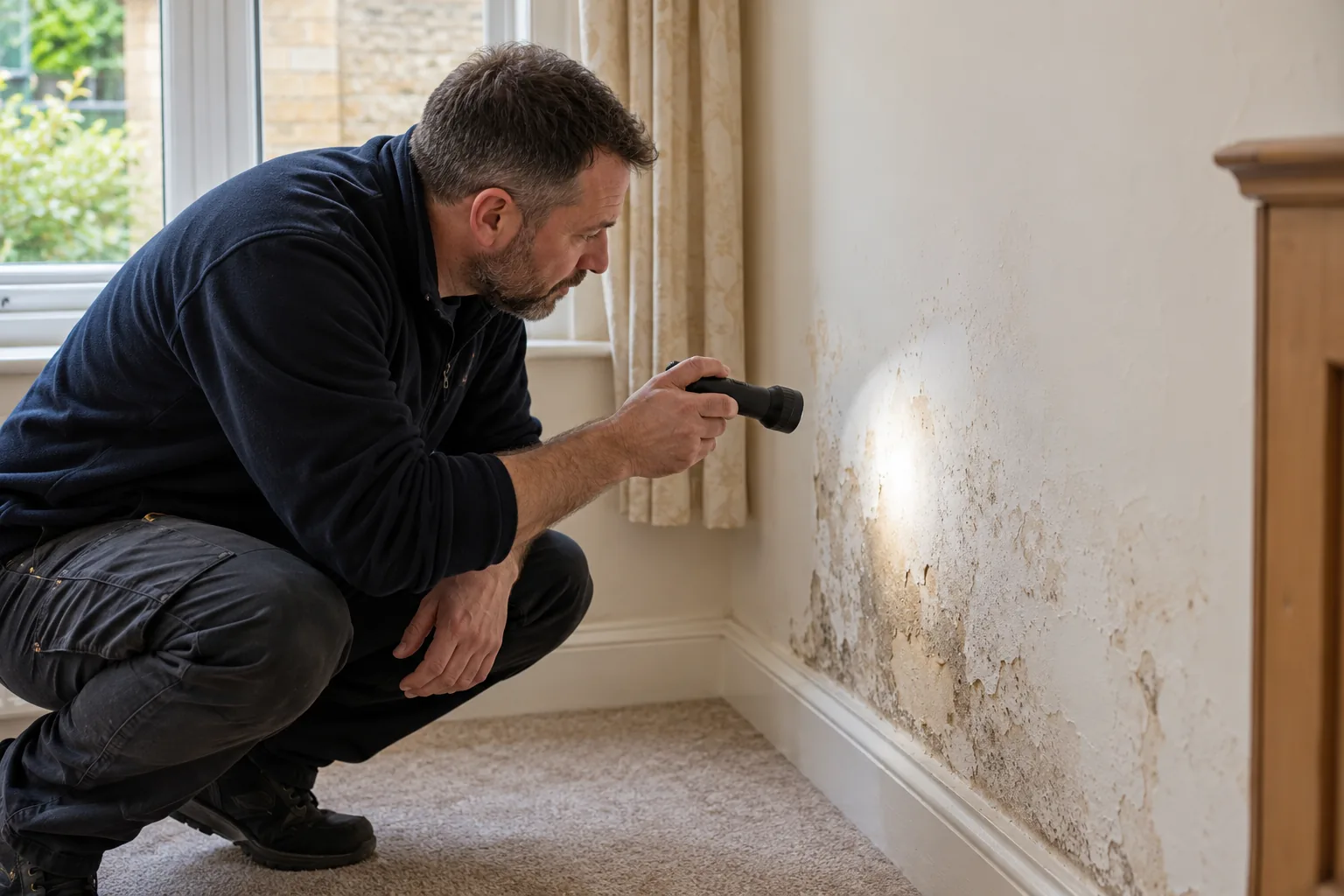
Examine visible surfaces in context
The location and pattern of growth matter. A view of the wall, ceiling, window reveal and surrounding finishes can help relate the affected area to the room. The agreed inspection should cover accessible surfaces identified in the enquiry and relevant nearby areas. Colour, texture or a photograph cannot reliably establish a mould species or the full extent within a material. A useful outcome explains what is visible, where it occurs and which questions remain. If a test is proposed, ask what it could establish and how the result would influence the next decision.
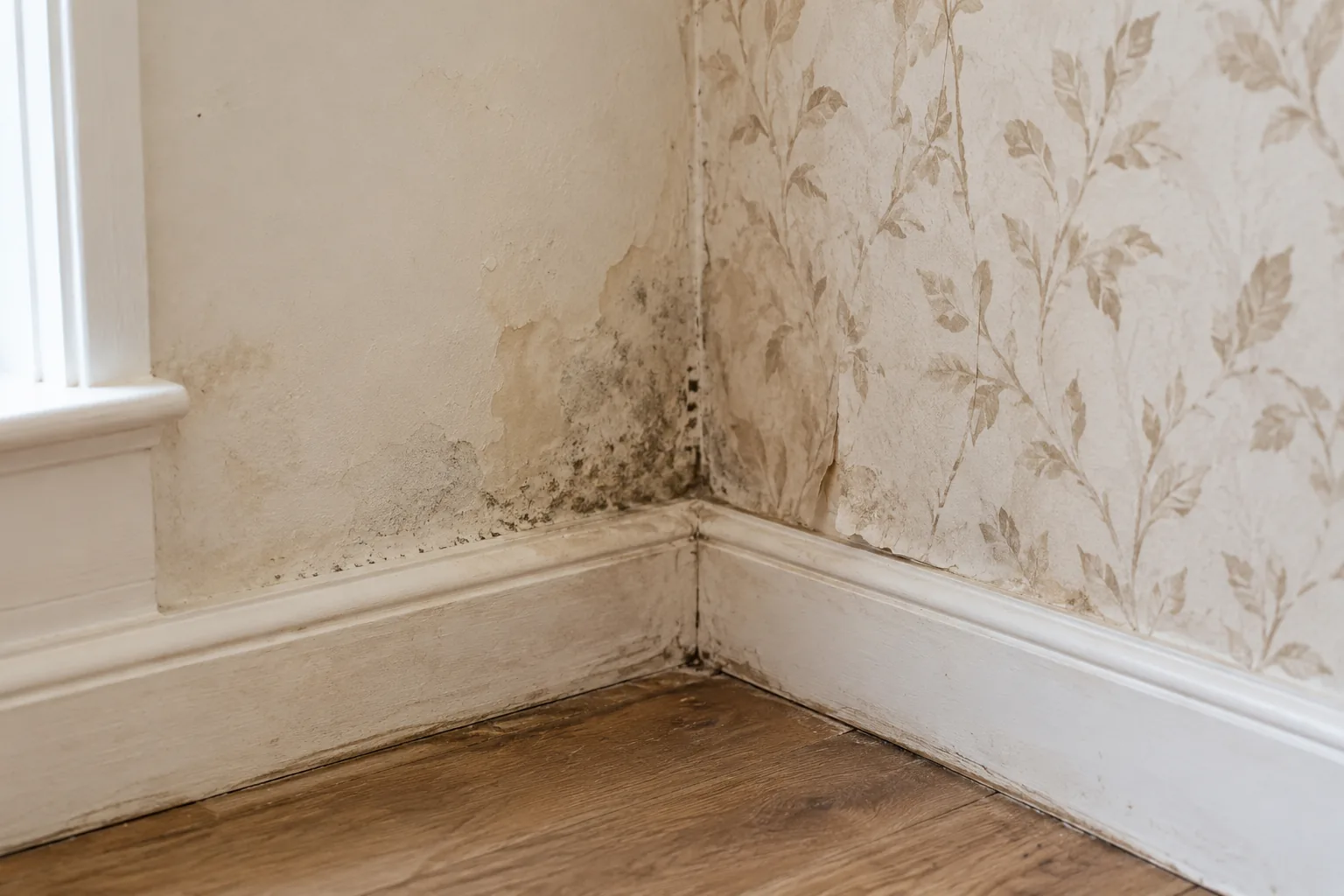
Assess affected materials separately
Sound paint, peeling wallpaper, softened plaster and swollen timber present different questions. Describe material damage separately from growth because treatment suitability depends on more than the surface mark. Repeatedly wet material may require a different response from an isolated patch on a sound finish. Ask what can be assessed in place and what requires additional access. Inspection does not promise restoration or replacement. If mould removal is recommended, its treatment proposal should explain preparation, expected finish and limitations. The inspection finding supports that decision but does not replace a clearly defined treatment scope.
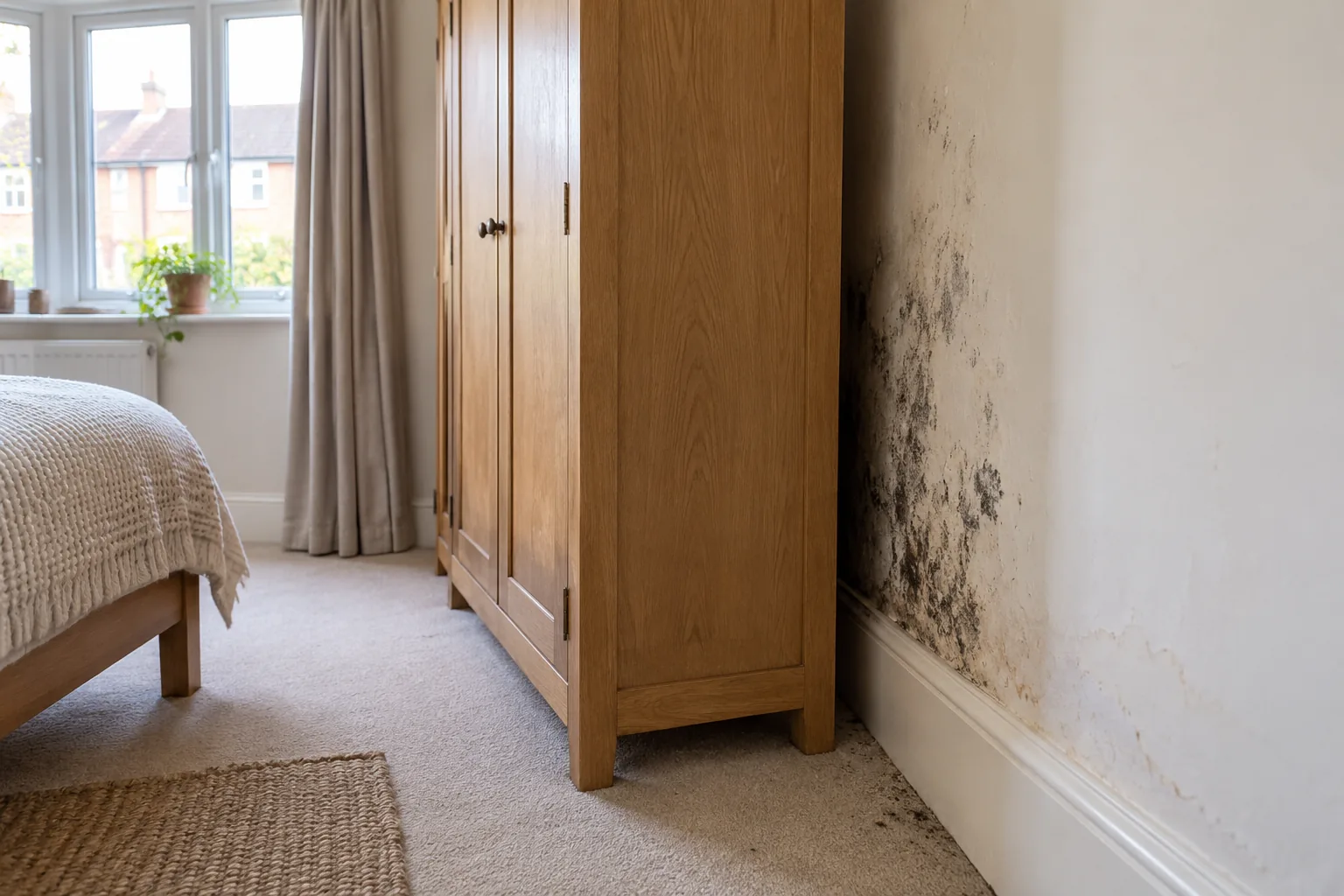
Review evidence of moisture
Relevant evidence can include droplets, damp marks, staining and a history of wetting. Its significance depends on location and relationship to surrounding materials. A ceiling stain asks different questions from growth following a cold window edge. Where measurements are proposed, ask what they are intended to establish and how they will be interpreted. An isolated reading should not become a complete diagnosis without supporting context. If a broader moisture enquiry is needed, discuss damp inspection. The recommendation should identify which question that additional assessment would address rather than simply add another service.

Consider room conditions without assumptions
Visible ventilation routes, furniture positions and patterns of moisture generation can help explain why one area is affected. These details should be considered alongside the property fabric, rather than automatically attributing the problem to an occupier. Describe heating and room-use changes that coincide with the issue. Avoid temporarily changing every routine before assessment without discussing it, because ordinary conditions are relevant. If airflow or extraction requires a focused enquiry, a ventilation assessment may be appropriate. Confirm whether that is included or separate and what observations or measurements it would involve.
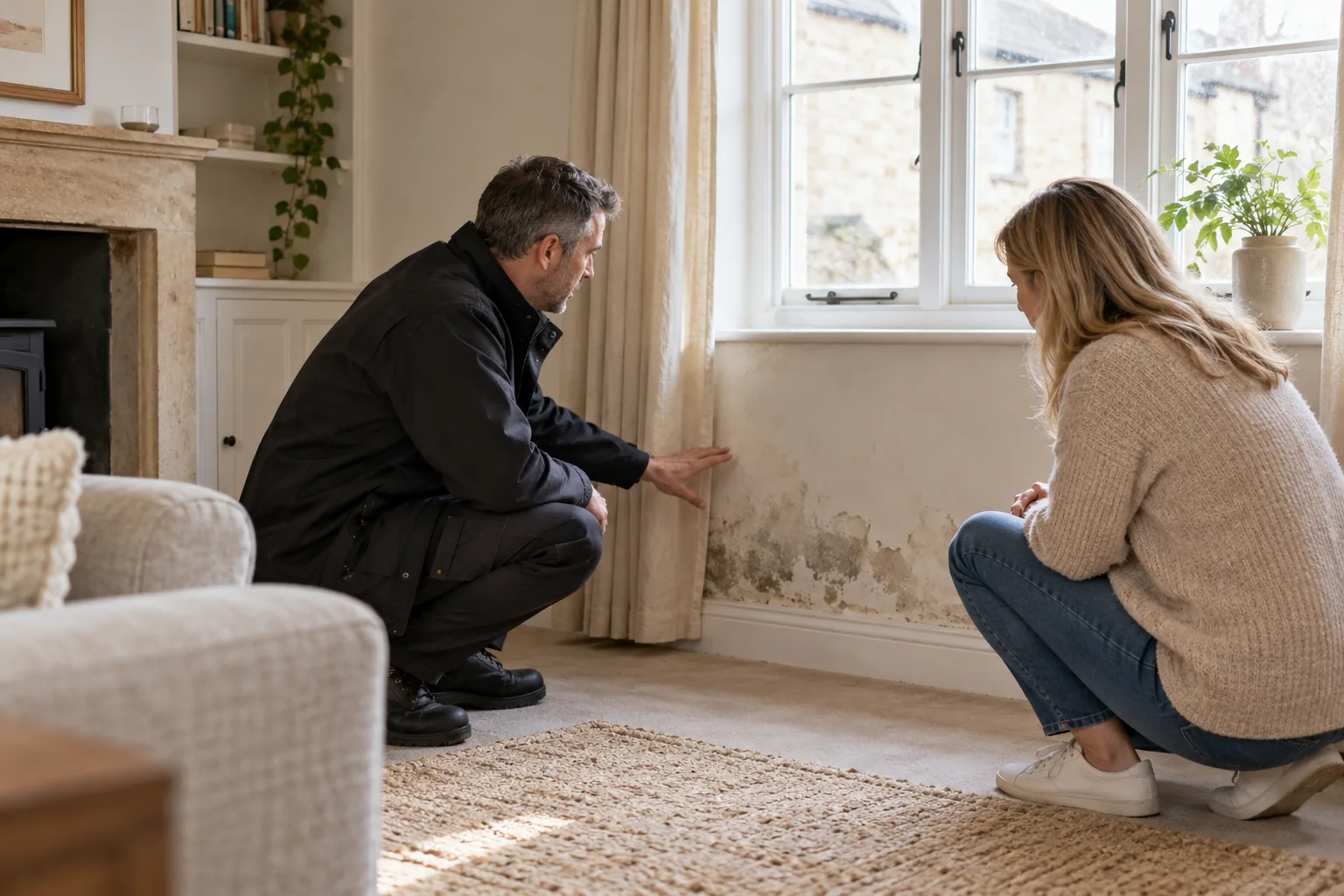
Arrange access without disturbing finishes
Tell us about furniture, appliances or fitted units restricting the view. Moving items may help, but safe handling and the condition of nearby surfaces need considering. Do not remove finishes or open building fabric simply to enable inspection without an agreed plan. An inaccessible area is not confirmed to be unaffected. The findings should identify where visibility was limited and what further access might be useful. If the issue may continue behind a fitting or finish, the next step could be authorised opening-up or specialist investigation, rather than an unsupported conclusion about hidden conditions.
Separate observations from possibilities
A clear explanation distinguishes what was observed from what is suspected. Growth and damaged paint can be described directly. A possible contributing condition needs supporting evidence and an explanation of uncertainty. Where the source cannot be established, the remaining question should be explicit. Ask what information might change the recommendation and how confident the interpretation is. This helps compare findings with a later treatment proposal. The value of inspection is reduced when uncertainty is concealed behind a definite label that the accessible evidence cannot support. Customers need both the findings and their practical limits.
Choose the next action from the findings
Recommendations may concern treatment, moisture investigation, ventilation or damaged materials. Ask which action should come first and why. An unresolved source of wetting may need attention before finishes are restored; a sound accessible surface may present another decision. Inspection does not automatically include treatment, repairs or decorating. If another professional is recommended, clarify the question they need to address and the affected locations. Keep the findings available when obtaining proposals so each contractor starts with the same description. This reduces the chance that an assumption is repeated without its supporting evidence being reviewed.
Monitor changes when recommended
If observation over time would be useful, agree what to record. Exact positions of new growth, wetness and timing in relation to weather or room use may help. A dated record is more informative than saying the property is always damp. Inspection is not a guarantee about future growth or every concealed space. Buildings and usage can change. If growth spreads, returns after intervention or develops a different pattern, compare it with the original findings and report the change. Any reassessment should take account of new evidence, completed work and the limits of the original access.
Decisions to clarify before arranging work
| Inspection question | Useful evidence | Do not assume |
|---|---|---|
| Where is growth visible? | Room and surface locations | Hidden materials are clear |
| Is the material sound? | Flaking, softness or swelling | Cleaning restores damage |
| What may contribute? | Moisture pattern and history | Colour proves a cause |
| What happens next? | Findings and limitations | Repairs are included |
| Before assessment | During the visit | After findings |
|---|---|---|
| Explain previous treatment | Distinguish growth from damage | Confirm treatment scope |
| Describe access limits | Identify unseen areas | Agree further access |
| Provide the timeline | Compare pattern and timing | Record relevant changes |
Practical questions about this service
Is sampling always included?
No testing method should be assumed. Ask what the inspection includes and what a proposed sample could establish. Visual assessment, laboratory identification and a wider building investigation have different purposes and limitations.
Can inspection rule out mould inside a wall?
Not from accessible surfaces alone. Hidden conditions need suitable access or further investigation. Findings should say what was viewed and what remained unseen, rather than treating a clean-looking surface as proof about concealed areas.
Should I repaint before inspection?
Ask about preparation before altering the visible pattern. New paint can obscure evidence and its history. If work is already complete, describe the materials applied and dates so the assessor can consider those changes.
Will I receive a report for my landlord?
Confirm the output before booking. A written report suitable for a particular purpose cannot be assumed. Explain who requires the information and what decision it needs to support, then check the proposed scope against that requirement.
Is removal included during the inspection?
Inspection and treatment are separate unless a combined scope is confirmed. Findings may change which treatment is appropriate or indicate another investigation. Ask what can reasonably be included before preparing the property for a visit.
Information to prepare for the discussion
Describe the inspection question: explain whether you need the visible extent reviewed, recurring growth assessed or a clearer basis for deciding on treatment. Identify the rooms and materials involved, and distinguish what is visible now from what has been reported by another person or seen previously.
Preserve the history of the pattern: note earlier cleaning, changes in room use and any known leak or repair near the affected surface. If growth is currently hidden by furniture, explain the access restriction before booking. Ask what can reasonably be assessed without disturbing finishes or moving heavy items.
Confirm how findings will help you: ask whether the proposed assessment will explain observed growth, likely contributing conditions and limitations. A written record or photographs should only be assumed if included in the agreed scope. Tell us if an owner or managing agent needs the findings so the required format can be discussed.
Discuss the next step for your property
Call +44 20 3966 3944 with your Wembley postcode and the affected rooms. Ask what the proposed visit would examine, what can reasonably be established and which questions may remain. The scope and access requirements should be clear before arrangements are confirmed.
Photographs are generated illustrations. They do not depict verified company staff or completed customer work.