
Mould causes · 3 November 2026
Why Mould Reappears After Cleaning in Wembley Homes
Recurring mould usually means moisture is still reaching the surface. Learn how condensation, leaks and rainwater differ, and what to check before redecorating.
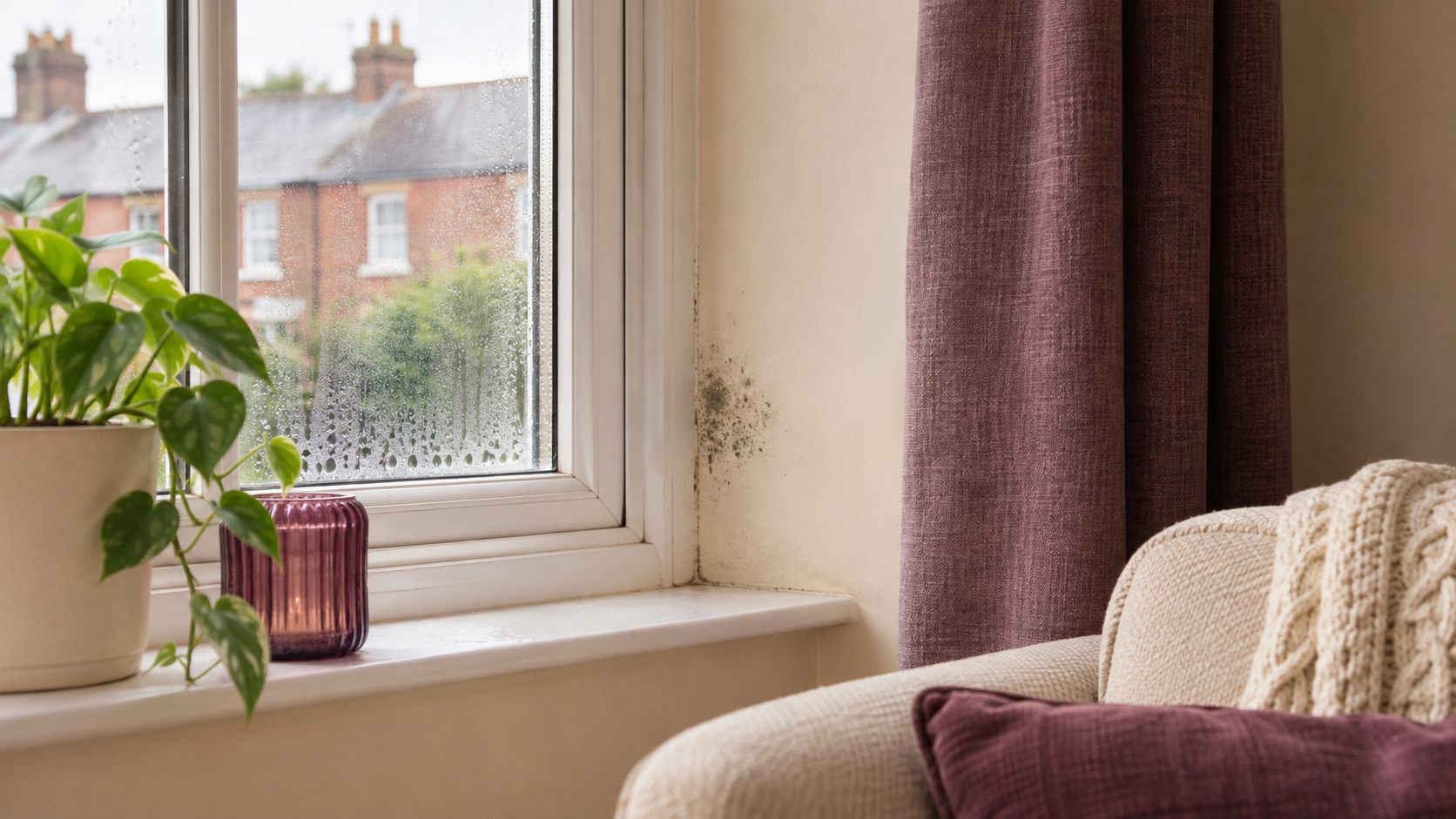
Freshly cleaned mould can make a room look reassuringly better. When dark marks reappear a few weeks later, the cleaning has usually addressed the visible growth while moisture remains available. The useful question is therefore not which cleaner is strongest, but where the water is coming from, how the surface stays damp, and whether the underlying material has dried. In a Wembley home, several sources can produce similar looking patches. A careful investigation separates them before anyone chooses a repair.
Cleaning and prevention solve different problems
Wiping a surface removes some visible growth. It does not repair a leaking pipe, clear a blocked gutter, warm a persistently cold corner or improve ineffective extraction. Painting over staining without correcting the cause can conceal the problem temporarily. The UK government’s guidance on damp and mould advises identifying and tackling the underlying cause, and says visible mould, a mould odour or water damage warrants attention. The aim is to stop the surface becoming wet again, then deal with affected finishes appropriately.
Start by noting carefully when the marks return. Are they confined to one wall, concentrated behind a wardrobe, or spread along a bathroom ceiling? Do they worsen after showers, overnight, or after heavy rain? Avoid assuming that the colour of the growth identifies its species or its cause. Appearance alone cannot tell you which moisture route is involved.
Condensation can repeatedly wet the same surface
Warm indoor air carries water vapour from cooking, bathing, laundry and ordinary occupancy. When that air reaches a colder surface, water can condense. The issue often shows up at window reveals, external wall corners and areas where furniture restricts airflow. The surface may be dry in the afternoon yet wet often enough overnight for growth to return.
Look for water on glazing in the morning, persistent misting after a shower, or an extractor fan that runs but does not clear steam effectively. Check whether background vents are open and unobstructed. These observations are clues, not a diagnosis: a cold wall may also have a separate defect. If several rooms show related patterns, a condensation investigation can assess the whole pattern instead of treating each patch as an isolated cleaning job.
A dehumidifier can remove water from indoor air, but it does not reveal why moisture is accumulating or whether a wall is being wetted from another source. Moving furniture slightly away from an outside wall may improve local airflow, although that cannot compensate for a failed fan or a leak. The right response depends on the building, heating and ventilation together. Government guidance specifically treats ventilation, building deficiencies and heating conditions as connected factors rather than a single universal fix.
Rainwater and plumbing leaks need a different response
A patch that darkens after rainfall may point towards external water entry. Gutters, downpipes, roof details, window junctions and wall defects all deserve consideration, but the visible indoor mark does not prove which one is responsible. Observe the timing and location. A high mark near an external wall after wind-driven rain tells a different story from widespread morning condensation on cold glazing. Do not climb onto a roof or work at height to test a theory; a safe ground-level visual check is enough for an initial record.
Plumbing can also wet a concealed area intermittently. Moisture below a bathroom, near a radiator or alongside a pipe route may travel before it becomes visible. If the mark persists despite changes in ventilation, or returns independently of weather, hidden leak detection may be relevant. Fixing the source is only the first stage: a soaked lining, plaster or timber may require time and an appropriate drying plan before finishes are restored.
Some homes have more than one mechanism at once. An external leak may dampen a wall while indoor humidity adds condensation. One photograph or moisture meter reading cannot establish the full cause. A mould inspection can document the affected area and help direct the next investigation when the pattern is unclear.
What to do before cleaning again
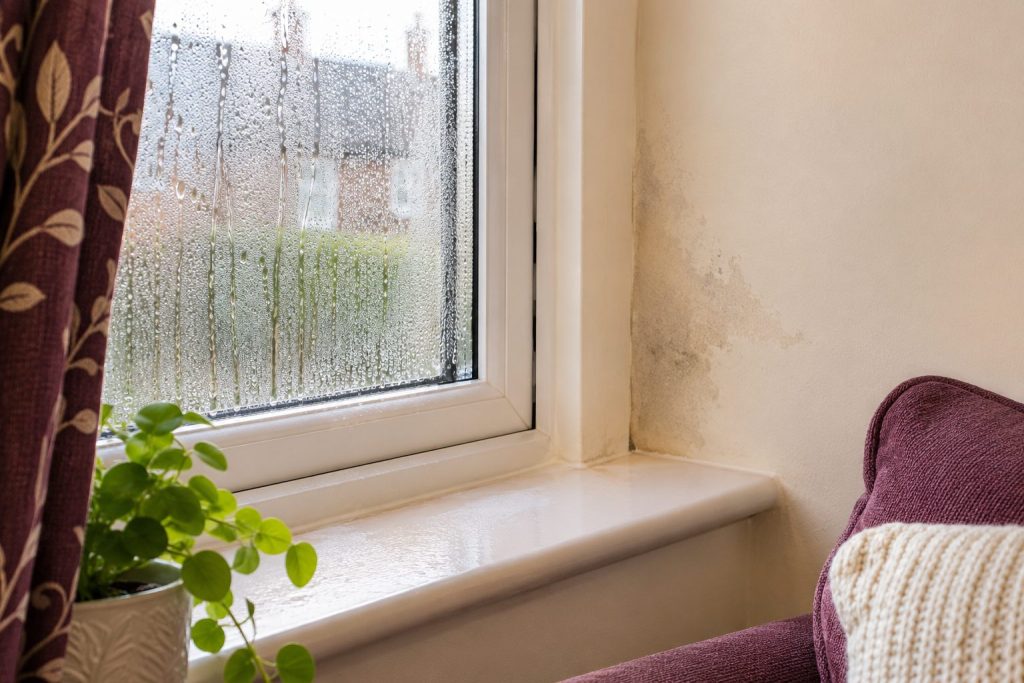
First, record the extent of the growth and any related staining. Photograph the area from a distance and close up, including nearby windows, vents or pipework. Note the date, recent weather, water use and whether the surface feels damp. This helps distinguish a recurring patch from residue left after cleaning. Keep children and anyone with a respiratory condition away from disturbed growth while deciding on the next step.
Second, check the straightforward sources that can be observed safely. Is a bathroom fan operating and extracting air outside? Is a gutter visibly overflowing during rain? Are there signs of drips beneath accessible pipes? Do windows regularly collect water? The purpose is to gather evidence, not to start dismantling building fabric or to decide that one observation explains everything. Where a rented property is involved, report the issue to the landlord or managing agent promptly and retain the dated record.
Third, consider the scale and the material affected. Growth on a small, accessible, hard surface is different from extensive contamination, damaged plasterboard or recurrent growth inside a void. Larger areas and porous materials can require professional assessment and removal. Do not mix cleaning chemicals, and follow the product instructions for any household cleaning. If the source has not been found, repeated aggressive cleaning can create work without producing a durable improvement.
Plan the repair in the right order
Confirm the moisture route first. Repair a leak or external defect where one exists, or address the ventilation and temperature conditions behind condensation. Allow affected materials to dry as appropriate, then decide what must be cleaned, removed or replaced. Finally, monitor the area through the conditions that previously triggered the problem. A dry-looking wall immediately after repair is encouraging, but it is not proof that the original pattern cannot recur.
If you are deciding whether to repaint, ask what evidence shows the substrate is dry and the cause has been corrected. A stain-blocking primer may improve appearance, yet it cannot keep incoming water out. Similarly, a fan upgrade cannot fix a leaking downpipe. Matching the remedy to the moisture route is the part that prevents the familiar cycle of clean, repaint and repeat. For recurring growth in Wembley, an assessment of the cause should come before another cosmetic finish.
When to seek help promptly
Do not wait for a patch to spread widely if there is active water entry, a strong persistent odour, significant damage or concern about someone’s health. Government guidance recognises that damp and mould can affect health and that the underlying issue should be addressed. A building assessment cannot diagnose an illness; anyone concerned about symptoms should seek advice from a healthcare professional. For the property, explain where the growth is, when it returned, what has already been cleaned and how the pattern changes with weather or room use. Those details help an inspector focus on the likely sources and recommend the next practical step.